Electrical · Free
Diesel Generators: AMF, ATS and Synchronising
Diesel generating sets from the engine and alternator to the panel: ISO 8528 ratings, excitation and the AVR, governors and droop, DSE, ComAp, DEIF and Woodward controller concepts, automatic mains failure sequences and timers, transfer switches and neutral switching, synchronising and check-sync, kW and kVAr load sharing, multi-set and mains paralleling, generator protection by ANSI number, sizing and derating, commissioning, maintenance and troubleshooting, ending in an AMF and two-set synchronising scheme.

Inside the course


From the lessons
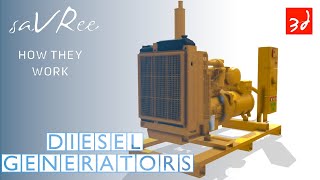
How a diesel generating set works and how it is rated
saVRee
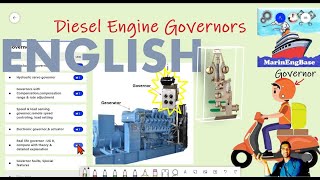
The diesel engine, its systems and the speed governor
MarEngBase

Automatic mains failure: sequence, timers and panel wiring
Ignatius Variath

Synchronising generators: conditions, synchroscopes and check-sync
Jim Pytel

Paralleling systems: multi-set plants, mains parallel and load demand
Cummins
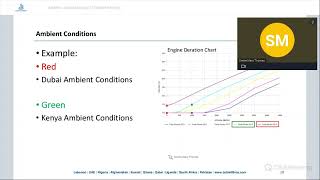
Sizing, derating and installing a generating set
Jubaili Bros
Lesson frames belong to the creators named in the Credits below and are shown from YouTube.
What you will learn
Rate and size a generating set for its duty; explain how the alternator, AVR, engine and governor hold voltage and frequency; configure the I/O and alarms of a genset controller; write and time an AMF sequence; choose an ATS type, transition and pole count; synchronise sets by hand or automatically and check the result; predict load sharing from droop settings; set up load demand and mains paralleling modes; explain each protection function; plan commissioning and maintenance; troubleshoot common faults; and design an AMF and synchronising scheme a commissioning engineer can test.
- Rate a generating set under ISO 8528-1 and check a load profile against the 70 percent average limit
- Explain brushless excitation, PMG and shunt AVR supplies, and estimate fault current from X''d
- Calculate governor droop, no-load speed and magnetic pickup frequency, and choose droop or isochronous control
- Configure a genset controller's I/O, CT ratio and alarm classes using DSE, ComAp, DEIF or Woodward concepts
- Write and time an AMF sequence and choose the ATS transition, pole count and rating
- Synchronise sets with a synchroscope or automatic synchroniser and set check-sync windows
- Predict kW and kVAr sharing, set load demand thresholds and run sets in parallel with the mains
- Set generator protection by ANSI number, size for motor starting, plan maintenance and troubleshoot faults
For you
Taking Diesel Generators: AMF, ATS and Synchronising from the United States
- Free in the United States, as everywhere, and self-paced: lessons, notes and the final assessment are open at any hour, so your time zone and shift pattern do not matter.
- The optional certificate for learners in the United States is a one-off US$23.99. What you get for it
- Plants across the Americas most often run Allen-Bradley, Siemens and Inductive Automation; each has its own free course to take next.
- See automation and engineering jobs in the United States, and what the industry looks like in Houston, Detroit and Chicago.
- EDWartens also has a regional site for the United States, for classroom training and local support: edwartens.com/us.
The course project · about 10 hours
Specifying an AMF and two-set synchronising scheme for a cold store: load list, sequence, I/O list and protection settings
Take a cold store's standby power from its load list to a scheme a commissioning engineer can test: size two paralleled sets, write the sequence of operation from mains failure to return, build the I/O list for one set controller, and set out the protection and alarm settings with their reasons. The sample pack shows each document for a fictional cold store at a port.
Sample document pack, 5 documents, filled in for the scenario
- Load listLoad list and generator sizing checks: essential board EB-1
- Control narrativeSequence of operation: AMF, synchronising and load demand
- I/O listI/O list: set 1 synchronising and load-sharing controller
- Alarm listProtection and alarm settings: sets 1 and 2
- SATSite acceptance test record: AMF, synchronising and load demand
Read inside the course and download as a workbook. The project is optional practice, marked when you submit it; the certificate needs only the modules and the final assessment.
Course content
14 modules · 59 lessons · 13h 44m
In order, at whatever pace suits you. Each module ends with a practice task that builds on the last.
- 01How a diesel generating set works and how it is rated4 lessons20m
- 02The alternator, excitation and the automatic voltage regulator5 lessons1h 12m
- 03The diesel engine, its systems and the speed governor3 lessons45m
- 04Generator controllers: DSE, ComAp, DEIF and Woodward concepts9 lessons48m
- 05Automatic mains failure: sequence, timers and panel wiring2 lessons44m
- 06Transfer switches: types, transitions, neutral switching and ratings8 lessons48m
- 07Synchronising generators: conditions, synchroscopes and check-sync3 lessons1h 28m
- 08Load sharing: droop, isochronous control and kVAr sharing5 lessons1h 43m
Requirements
- Who it is for
- Beginner to intermediate. For electricians, genset technicians, maintenance and facility engineers, panel builders, MEP and electrical design engineers, and electrical students. You should know single and three-phase power, kW, kVA and power factor, and how a contactor and a circuit breaker work.
- Software
- A spreadsheet (LibreOffice Calc is free) for the sizing, droop and timer sheets. Optional: a free controller configuration tool from the controller maker (DSE Configuration Suite, ComAp InteliConfig or DEIF Utility Software) to open a sample configuration; the course does not need any controller hardware. What to download, and how
- Hardware
- None. Generating sets, panels and controllers are shown in the videos. Real work on a set or panel needs a competent person and the site's permit and isolation rules.
Software you need
What to download, where from, what it costs and how to install it. Every link goes to the maker's own site, never a mirror.
Nothing to install
A spreadsheet is enough for the sizing, droop, load demand and timer sheets; controller makers' free configuration tools are optional.
Optional
Useful, not needed to finish the course.
- 01Free
LibreOffice
The Document Foundation
- Runs on
- Windows 10 or 11, macOS 11 or newer (Intel or Apple silicon), Linux
- Account
- None needed
- Size
- up to 1.5 GB of disk space on Windows
LibreOffice is free, open-source software under the Mozilla Public License 2.0, for any use including business. Calc is its spreadsheet.
Steps
- 1.Open the LibreOffice download page.
- 2.Check the page has picked your operating system, then select Download.
- 3.Run the installer (administrator rights are needed on Windows).
- 4.Start LibreOffice Calc for spreadsheet work.
- 5.Save as .xlsx if you need to share files with Excel users.
- Choose the latest main version unless your organisation asks for the older, more conservative release.
Official download pagelibreoffice.org
Checked against each maker's own page on 27 September 2026. Trial lengths and editions change; the maker's page is the final word.
Diesel Generators: AMF, ATS and Synchronising at a glance
Diesel Generators: AMF, ATS and Synchronising is a free, self-paced online course from EDWartens for electricians, genset technicians, maintenance and facility engineers, panel builders and electrical engineers who install, run, maintain or specify diesel generators, AMF panels, transfer switches and synchronising systems. It has 14 modules and 13h 44m of video lessons by saVRee, The Engineering Mindset, Cummins and others, with written notes and worked problems, a practical project with a document pack and a 15-question final assessment (pass mark 60%). Learning is free with an account; an optional certificate with a public verification code is issued when you pass. Last updated 27 September 2026.
All course factsHide course facts
- Price
- Free, for good. No trial, no card. The only paid item is the optional certificate, a small one-off fee.
- Who it is for
- Electricians, genset technicians, maintenance and facility engineers, panel builders and electrical engineers who install, run, maintain or specify diesel generators, AMF panels, transfer switches and synchronising systems
- Format
- 14 self-paced modules, 13h 44m of video, written notes, a practice task per module and one final assessment.
- Level
- Beginner. Beginner to intermediate. For electricians, genset technicians, maintenance and facility engineers, panel builders, MEP and electrical design engineers, and electrical students. You should know single and three-phase power, kW, kVA and power factor, and how a contactor and a circuit breaker work.
- Brand
- Vendor-neutral
- Software
- A spreadsheet (LibreOffice Calc is free) for the sizing, droop and timer sheets. Optional: a free controller configuration tool from the controller maker (DSE Configuration Suite, ComAp InteliConfig or DEIF Utility Software) to open a sample configuration; the course does not need any controller hardware.
- Hardware
- None. Generating sets, panels and controllers are shown in the videos. Real work on a set or panel needs a competent person and the site's permit and isolation rules.
- Certificate
- Optional EDWartens Certificate of Completion, verifiable by code. Not a vendor credential.
- Video lessons by
- saVRee, The Engineering Mindset, Cummins, Cummins Power Generation, Jim Pytel, Anscience, Gaurav J - TheElectricalGuy, MarEngBase, Mahindra Powerol, Deep Sea Electronics Ltd, ComAp, Woodward, Inc., DEIF - global supplier of energy control solutions, United Tech Power Inc., Ignatius Variath, Eaton, Electrician U, ASCO Power Technologies, BTCInstrumentation, Jubaili Bros, RealPars, HIMT, benzblogs Vlogs, Consulting-Specifying Engineer, Romero Engineering Company, Mirus International Inc, WellandTV, MahindraPowerol IBService, JOT POWER, Woodstock Power Company (independent creators, credited below)
- Language
- English
- Last updated
- 27 September 2026
A shareable EDWartens certificate
Finish every module and pass the final assessment, and the optional EDWartens certificate is yours. It carries a unique verification code on a public page anyone can check, so it stands up when a recruiter looks it up. See it below.
The course itself stays free whether or not you ever buy one.
Stuck? Ask a practising engineer
A free course usually means a comment section and hope. This one does not. Every module has an Ask-your-trainer panel that reaches the same engineers who teach our paid programme: people who commission panels for a living, not moderators.
Pairs well with
 FreeElectrical · FreeETAP Power System Analysis: Load Flow, Short Circuit, Protection, Arc Flash and StabilityFree ETAP course for electrical engineers: load flow, short circuit, protection and arc flash studies. Learning is free; the certificate is optional and paid.
 FreePLC programming · FreeSiemens TIA PortalFree Siemens TIA Portal course for beginners: write ladder logic for a simulated S7-1200 and WinCC HMI. Learning is free; the certificate is optional and paid.
 FreePLC programming · FreeSiemens TIA Portal in Three HoursThe first three hours of the Siemens TIA Portal course, cut to end on a win: what a PLC is, how it is wired, a project configured in TIA Portal, and your first ladder program running in simulation. Finish it in an evening or two, earn a certificate, and carry straight on into the full course.
 FreePLC programming · FreeTIA Portal: Build a MachineOne machine, start to finish. Take a bottle filling line from a written specification and an I/O list to a structured S7-1200 program with a fill station, a capper, a reject sorter and an operator screen with alarms, then test it against a written record and archive it for hand-over. The lessons are the reference; the machine is yours, and it is what you submit.
More free courses: Free electrical design and control panel courses · Free power system and ETAP courses
Learner reviews
No reviews yet
Reviews here are written only by learners who have finished every module of Diesel Generators: AMF, ATS and Synchronising, and they are published exactly as written. Finish the course and yours will be the first.
Common questions
What is this diesel generator course?
It is a free-to-learn online course on diesel generating sets and their controls: ISO 8528 ratings, the alternator and AVR, the engine and governor, genset controllers, automatic mains failure (AMF) panels, automatic transfer switches (ATS), synchronising, load sharing, paralleling, protection, sizing, maintenance and troubleshooting. It ends with an AMF and two-set synchronising scheme you design yourself.
Who is the generator synchronising and AMF course for?
It is for electricians, genset technicians, maintenance and facility engineers, panel builders, MEP and electrical design engineers and electrical students who install, operate, maintain or specify standby and prime power generators. You should know single and three-phase power, kW, kVA and power factor, and how a contactor and a circuit breaker work.
Does the course teach DSE, ComAp or DEIF controller programming?
It teaches the concepts every genset controller shares, using official videos from Deep Sea Electronics, ComAp, DEIF and Woodward: modes, inputs and outputs, CT ratios, alarm classes, AMF timers, synchronising windows and load sharing. Product names are used only to describe what is taught; it is not a manufacturer's training or certification, and real settings come from the maker's manual.
Is the diesel generator course free to learn?
Yes. Every module, the notes, worked problems, practice tasks, the project and the final assessment are free to learn, and the only software you need is a free spreadsheet. The certificate is optional.
Which standards does the course cover?
It explains ISO 8528 for generating set ratings and performance classes, IEC 60947-6-1 for transfer switching equipment, IEC 60364-5-55 and BS 7671 for generating sets in installations, IEEE C37.2 device numbers for protection, and NFPA 110 for emergency power testing in the United States. Standards are paraphrased, and local regulations and a competent person govern real work on generators and panels.
How long does the Diesel Generators: AMF, ATS and Synchronising course take?
About 29 hours at your own pace, including about 14 hours of video by named creators and official makers' channels, plus the notes, worked problems and practice tasks. The optional cold store generator scheme project takes about 10 hours more.
Is it useful for generator jobs in the Gulf, Nigeria and Pakistan?
Yes. Standby and prime power generators with DSE, ComAp and DEIF controllers are standard in the Gulf, West Africa and South Asia, where AMF panels, synchronising panels and genset maintenance are everyday work for electricians and facility engineers. The course uses 50 Hz examples and covers 60 Hz where it differs.
What certificate do I get, and how is it verified?
You get a verifiable certificate of completion from EDWartens when you finish the modules and pass the 15-question final at 60 percent. It carries a unique certificate number and a QR code that open a public verification page showing the course, the modules covered and your final score.
What you walk away with
Your certificate for Diesel Generators: AMF, ATS and Synchronising
Finish the course, pass the final, and this is the document with your name on it.

Verifiable by anyone
Adds to LinkedIn in one click
QR code on the certificate
Names what you can do
A permanent link
Earned, not attended
Learning is free. The certificate is optional.
Add it now and pay only when you have finished the course, or come back for it later. One-off, US$23.99, with a receipt.
Issued by EDWartens, the training division of Wartens, as a Certificate of Completion for this self-paced course. Sold by Wartens Ltd (England and Wales). It is not a vendor certification, a university award or a CPD-accredited activity, and it does not certify competence on live equipment. Delivered electronically; see the refund policy.
Credits
Who made the video lessons
The video lessons in this course were created by the people below, not by EDWartens. Every lesson streams from its creator's own YouTube channel; EDWartens neither hosts nor sells that footage, and the creators are not affiliated with EDWartens and do not endorse this course. What EDWartens wrote is the study plan, the notes, the practice tasks and the assessments.
- saVReethe animated explanation of a diesel generating set and its parts
- The Engineering MindsetAC generator basics: how rotation and a magnetic field make three-phase voltage
- Cumminsthe Integrated Power Systems series: power system overview, paralleling control, generator protection, load demand, transfer switch functions, transition modes, bypass switches and withstand and closing ratings
- Cummins Power GenerationISO 8528 and EPA generator set ratings by duty class
- Jim Pytelthe full lectures on synchronous generators, loaded synchronous generators and generator synchronization
- Ansciencethe animation of an alternator's exciter, PMG and AVR
- Gaurav J - TheElectricalGuyhow generators keep voltage stable through excitation control
- MarEngBasethe English lessons on the AVR (error-operated and practical arrangement), diesel and electronic governors, and load sharing with a simulator
- Mahindra Powerolfuel system preventive maintenance on diesel generators
- Deep Sea Electronics Ltdthe official training videos on DSE Configuration Suite: reading, changing and writing a module's configuration
- ComApthe official tutorials on starting with an InteliLite controller, configuring I/O and ECU communication on InteliGen and InteliSys, and reading history records
- Woodward, Inc.getting started with the easYgen-3000XT controller and its toolkit
- DEIF - global supplier of energy control solutionsconfiguring an application on the AGC-4 controller
- United Tech Power Inc.a walk-through of the DSE7320 MKII front panel on a working set
- Ignatius Variaththe AMF control system explanation and the panel tutorial on AMF and ATS schematics, protection and electro-mechanical interlocks
- Eatonautomatic transfer switch fundamentals and grounding and bonding of generator sources with transfer switches
- Electrician Uthe difference between manual and automatic transfer switches and how they work
- ASCO Power Technologiesapplication considerations for closed transition transfer switches
- BTCInstrumentationsynchronizing AC generators with sync lamps
- Jubaili Brosthe webinars on the basics of synchronization, synchronization with the DSE8610, genset ratings, engine and alternator derating, and installation considerations
- RealParsspeed droop in power control
- HIMTV. R. Venkatesan's lectures on the purpose of governor droop and on AVR droop and power factor
- benzblogs Vlogsvoltage and speed biasing with the DSE8610 and troubleshooting a set that fails to stop
- Consulting-Specifying Engineerthe webinar on specifying generator set paralleling controls
- Romero Engineering Companyreverse power protection basics and voltage-restrained versus voltage-controlled overcurrent protection
- Mirus International Incthe webinar on preventing circulating current in parallel generator applications
- WellandTVthe overview of ISO 8528-5 performance classes
- MahindraPowerol IBServicegenerator preventive maintenance
- JOT POWERpreventive maintenance of a genset
- Woodstock Power Companythe step-by-step generator maintenance guide and the explanation of wet stacking and its prevention
If you are one of these creators and would like a lesson removed or credited differently, write to info@wartens.com.