Online · Free
AI in Healthcare and Pharma Internship
8 short weeks. Free. No patient data, ever.
By Wartens Ltd (UK), delivered through EDWartens.
- Free
- Online
- Any start date
- 1 to 8 weeks
Who it suits
Made for beginners.
- Students of pharmacy, nursing, life sciences, biomedical engineering and healthcare management.
- Anyone who wants to understand what AI can safely help with, and what it must never be used for.
- Read the notes on a phone, a tablet or a laptop.
What you will learn
Eight weeks, one picture each
Week 1
AI in healthcare and pharma: landscape and limits
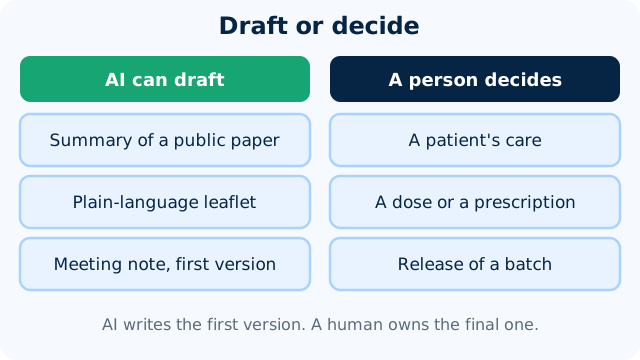
Name where AI helps in healthcare and pharma, say which decisions stay with a qualified person and list the data that never goes into a public AI tool.
Week 2
How AI tools work, in plain terms
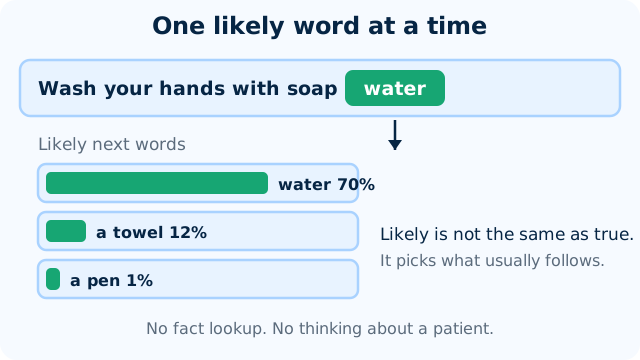
Explain in plain words how a chat assistant produces an answer, name the ways it goes wrong and write a clear five-part prompt.
Week 3
AI in drug discovery and research
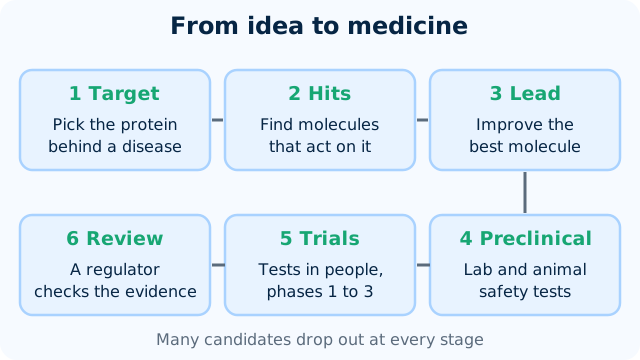
Name the stages of drug development, say where AI helps and where it does not, and run a literature search with AI where every citation is checked.
Week 4
AI in clinical trials and documentation
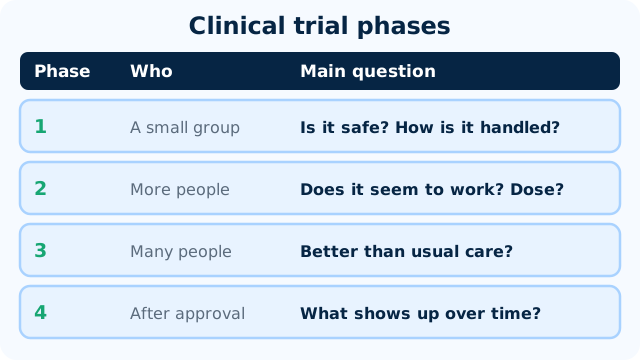
Explain the trial phases in plain words, say where AI helps with trials and paperwork, and draft a plain-language summary that a person then verifies.
Week 5
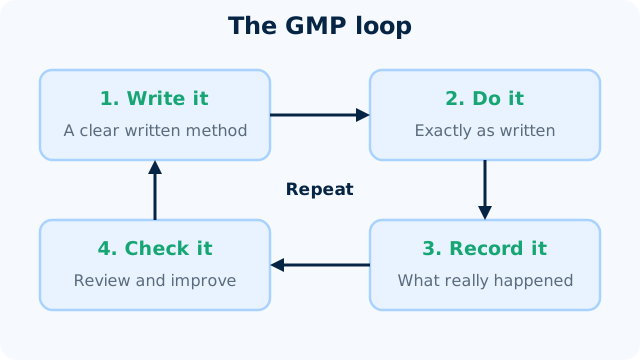
Quality, GMP and data integrity (ALCOA+)
Explain what GMP and data integrity protect, name the nine ALCOA+ principles, spot which one a faulty record breaks, and use AI on quality paperwork without giving up your own sign-off.
Week 6
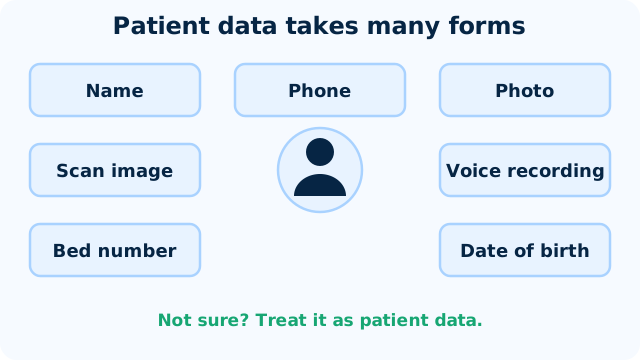
Patient privacy and safe use of AI
Recognise patient data in any form, sort information into never, approved-tool-only and fine for AI, and say what to do if something is shared by mistake.
Week 7
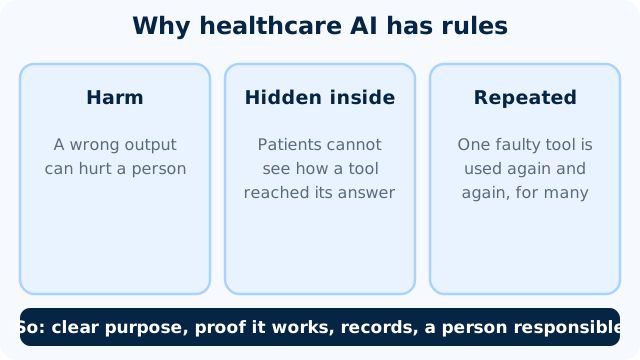
Regulation, explainability and governance
Rate an AI tool by its risk, say what human oversight it needs, and explain in plain words what an AI governance standard such as ISO 42001 asks for.
Week 8
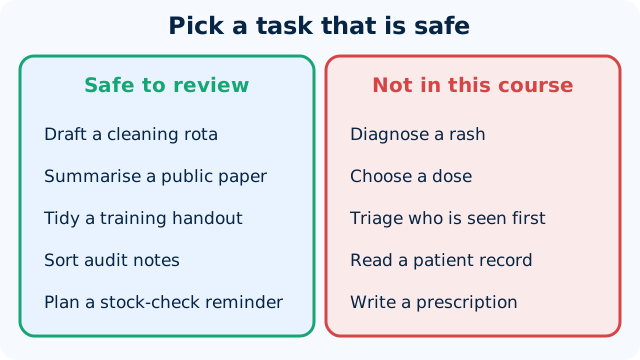
An AI use-case review for a pharmacy or ward
Write a one page review of an AI use for a non-clinical task in a pharmacy or ward, covering purpose, data, risks, safeguards, sign-off and how success is measured.
Practice, if you like
Try it on made-up documents.
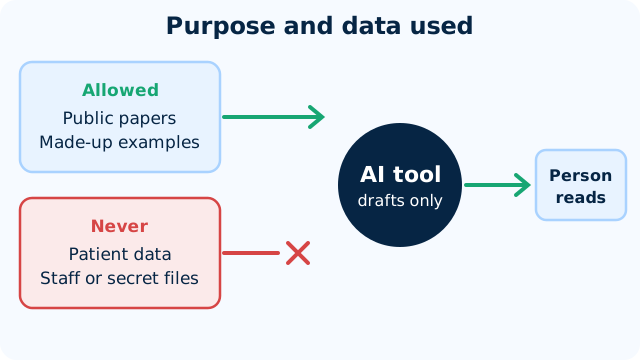
- Free tools: a free chat assistant (with no patient data, ever) and Google Sheets.
- Invented examples only: never a real patient, a real record or a real prescription.
- A mini project in week 8: an AI use-case review for a pharmacy or ward.
- Best on a laptop or tablet. A phone works for reading.
Your pace
Choose a start date and a length.
Any length from 1 to 8 weeks. Start on any date from today. Retry the weekly checks and the final quiz as often as you like.
Certificate and documents
Want proof? Add it later.
Questions
Quick answers
Is the AI in Healthcare and Pharma Internship really free?
Yes. Joining is free and so are all eight weeks, the weekly checks and the final quiz. You pay only if you choose an optional add-on.
How long can I take?
This internship runs for 1 to 8 weeks. You pick a start date and can change your plan later. All eight weeks are open from day one, so a short plan moves fast and a long one gives you room.
What do I need?
A laptop or phone, Google Sheets and a free AI assistant account. You never need any patient information. Every tool used is free or has a free tier, so there is nothing to buy. The notes also read well on a phone.
What will I actually do?
You read short notes with diagrams, watch a few videos and take an easy check each week. Each week ends with a worked exercise, such as summarising a made-up paper, tidying an invented procedure, spotting a data integrity gap or scoring an AI use case for risk. Week 8 reviews one AI use case for a pharmacy or ward.
What do I get at the end?
A certificate of completion is an optional paid document, issued by Wartens Ltd (UK). It has a QR code and a number, so anyone can verify it at edwartens.com/verification. The lessons stay free, and you can finish without buying anything.
Is this a paid position?
No. It is training, not employment. Nothing is paid to you, and nothing here promises work with any company.
Who wrote the course?
OFORO, the Wartens AI company, wrote the notes and exercises. OFORO builds the AI behind Wartens' engineering and training work. The internship is run by Wartens Ltd (UK) and delivered through EDWartens.
What about privacy and wrong answers?
AI never diagnoses or prescribes in this course. Examples are about admin, documentation, literature and quality work. AI can invent facts and references, so every output is checked by a qualified person. Never put patient data into a public chatbot: health privacy law applies everywhere. The course gives no medical advice.
Your first lesson is free.
- No card to start
- Start any date
- Verify with a QR code