Project Sim
Practise on real-style work orders
Each project starts with a work order from a client. You program a PLC or wire a control panel, then test it against a numbered acceptance test. It runs in your browser. The lab is free with a free account.
Open the labPLC lab
Write ladder logic for a plant that responds. Check it with a factory acceptance test.
PLC-01
Motor start/stop with overloadStart, seal-in, stop, E-stop and an overload that trips. The first thing every PLC programmer builds.
PLC-02
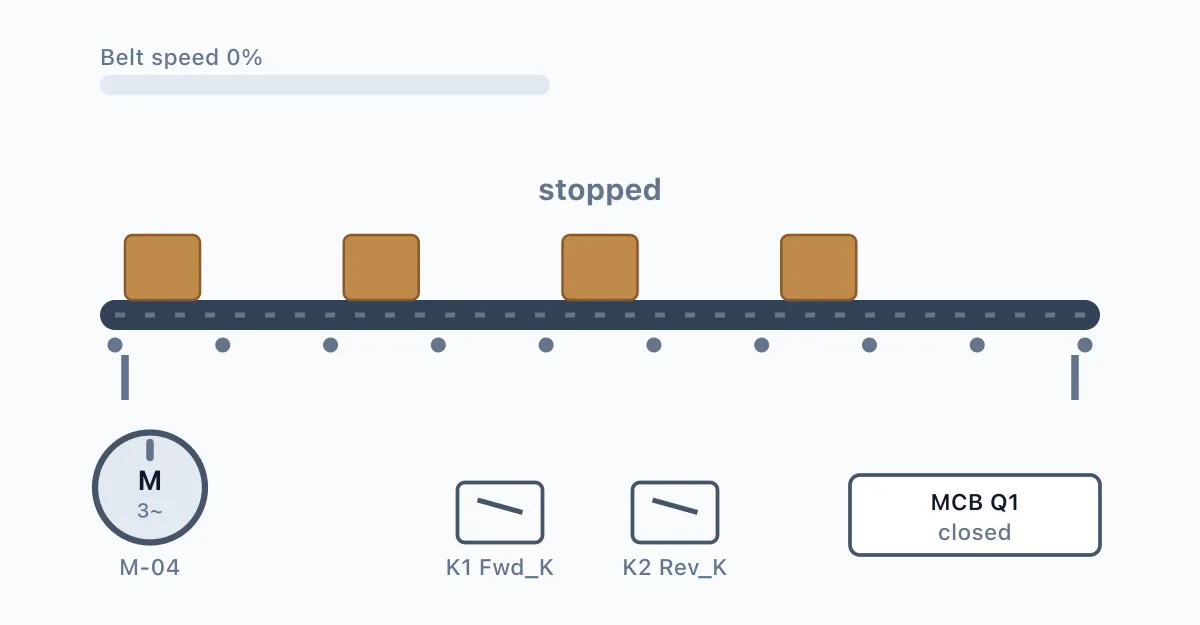
Forward/reverse conveyorTwo contactors that must never close together, and a dead time before the motor may reverse.
PLC-03
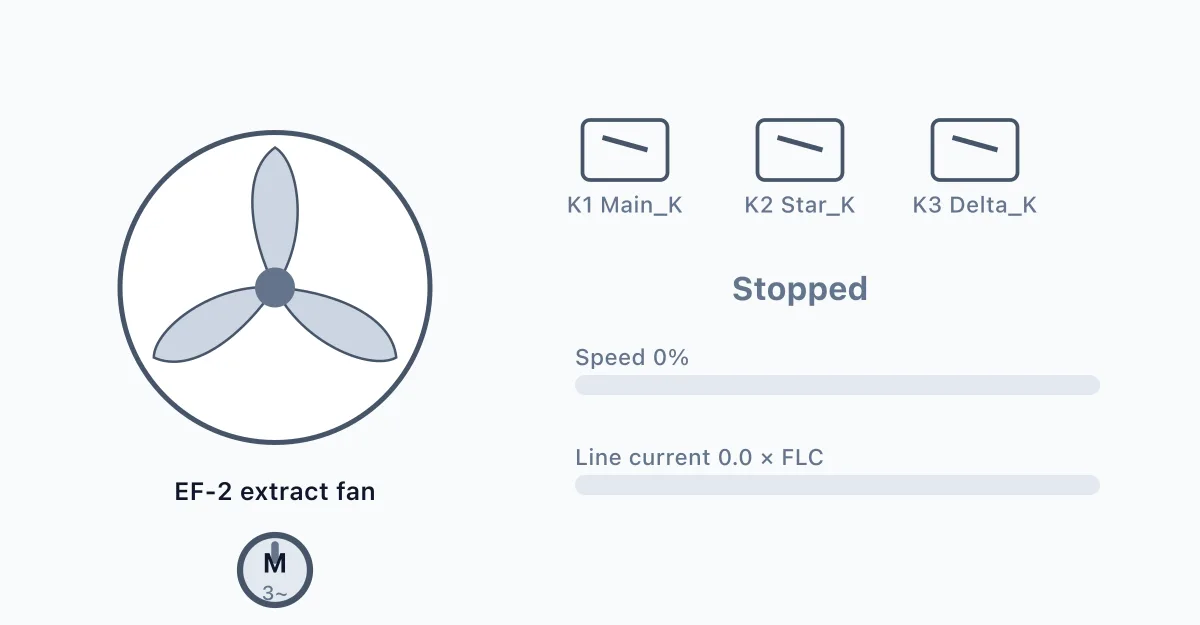
Star-delta fan starterStart in star, change over to delta through a dead gap, and watch the starting current.
PLC-04
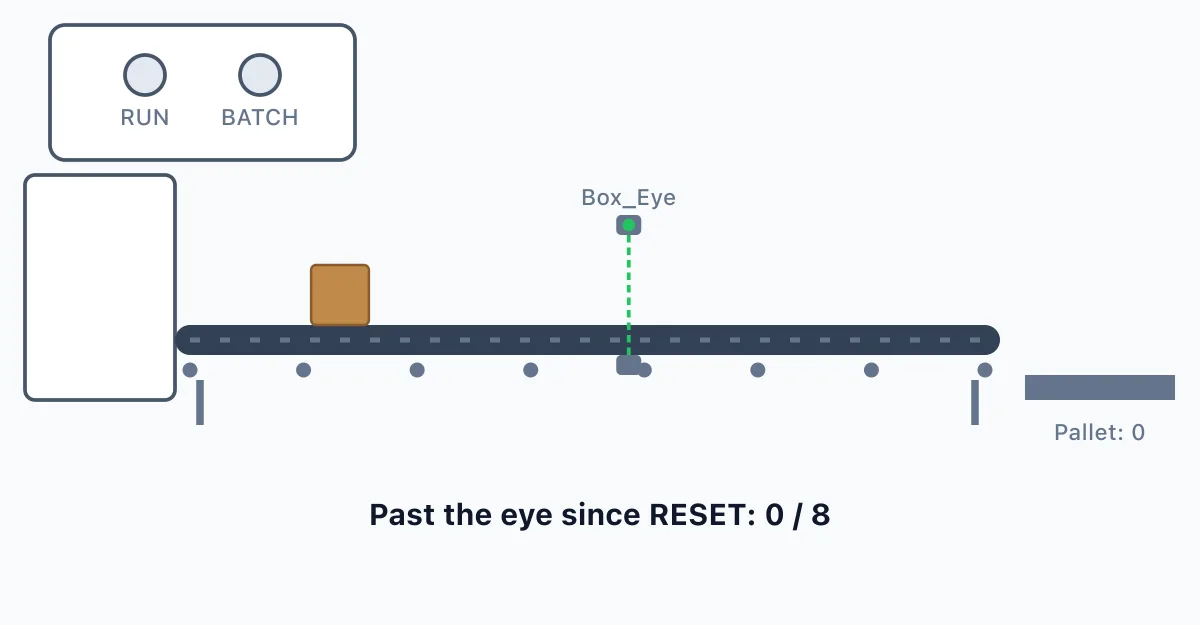
Batch counter on a packing lineCount boxes past a photo-eye once each, stop at the batch size, and survive a backed-up line.
PLC-05
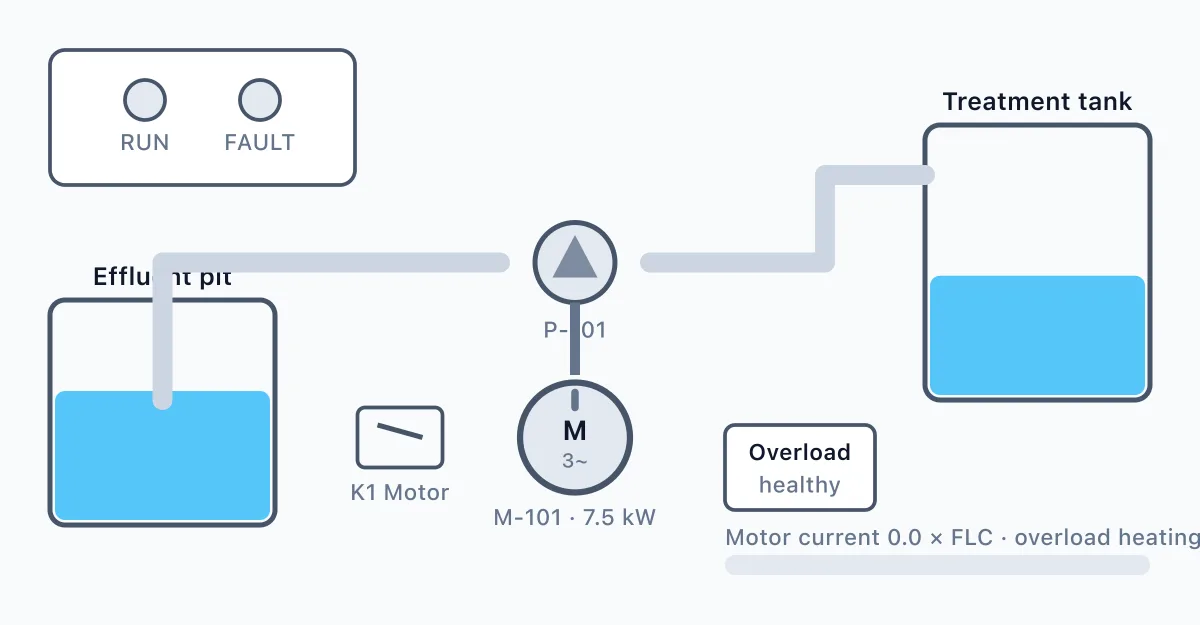
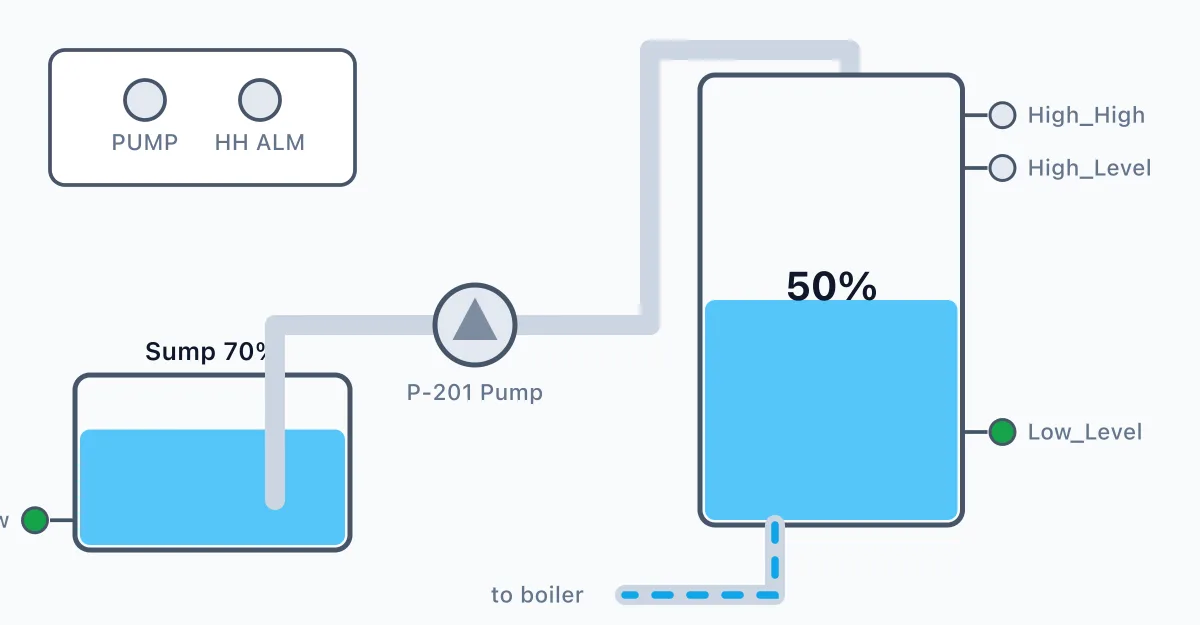
Tank filling pumpFill between two floats, protect the pump from running dry, and latch a high-high alarm.
PLC-06
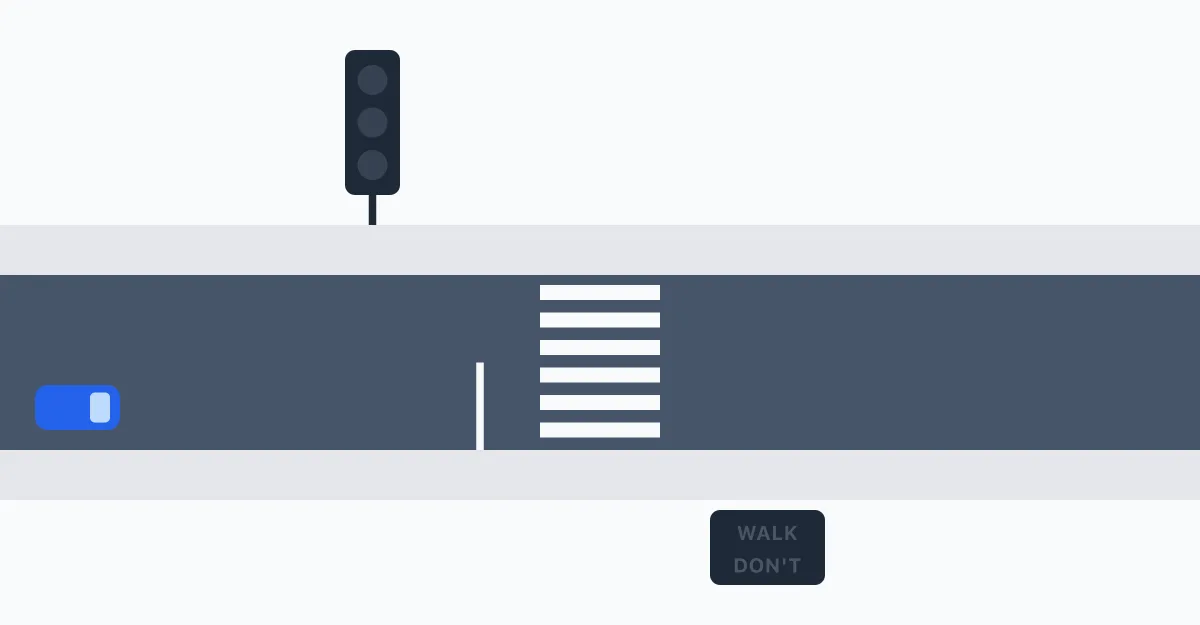
Pedestrian crossingA timed sequence with a push button, where one wrong light puts somebody in danger.
PLC-07
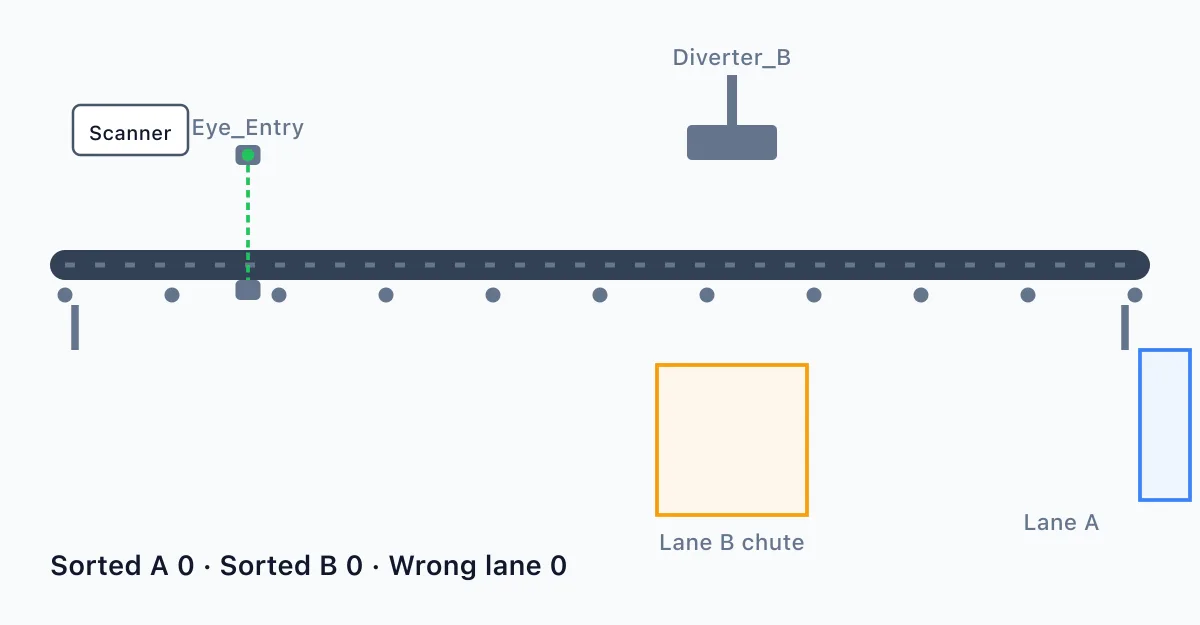
Parcel sorterRead the lane at the beam, wait for the parcel to travel, and fire the pusher at the right moment.
PLC-08
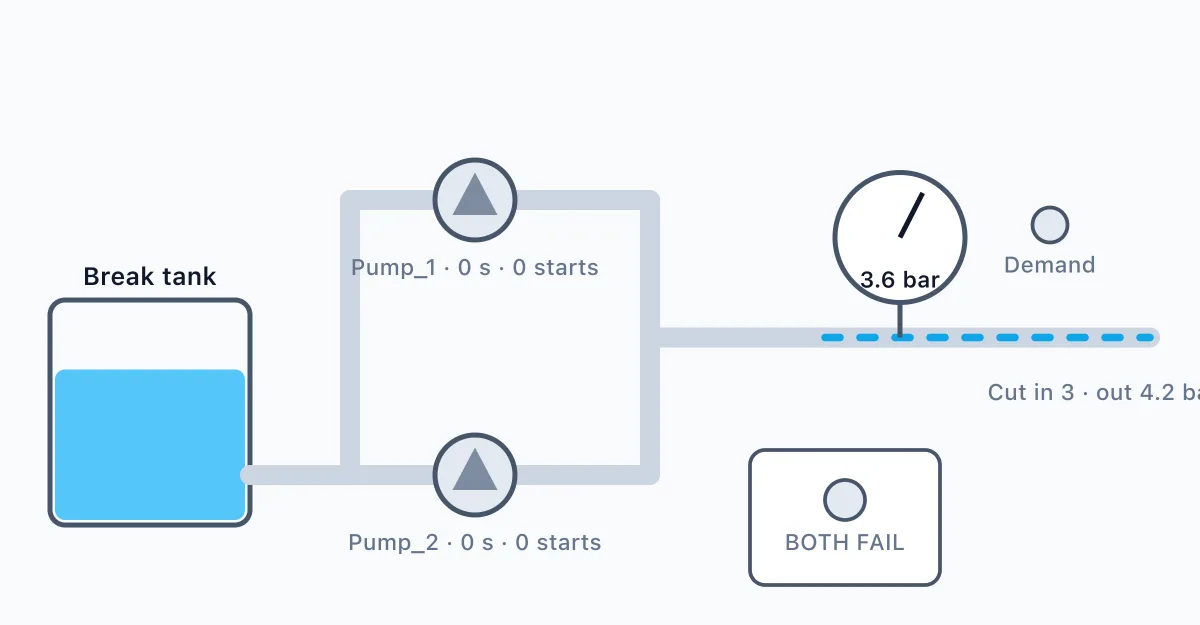
Duty and standby pumpsShare the work between two pumps and take over within seconds when one trips.
Panel Lab
Lock out, prove dead, wire the conductors, restore power and test, or find a hidden fault.
Level 1
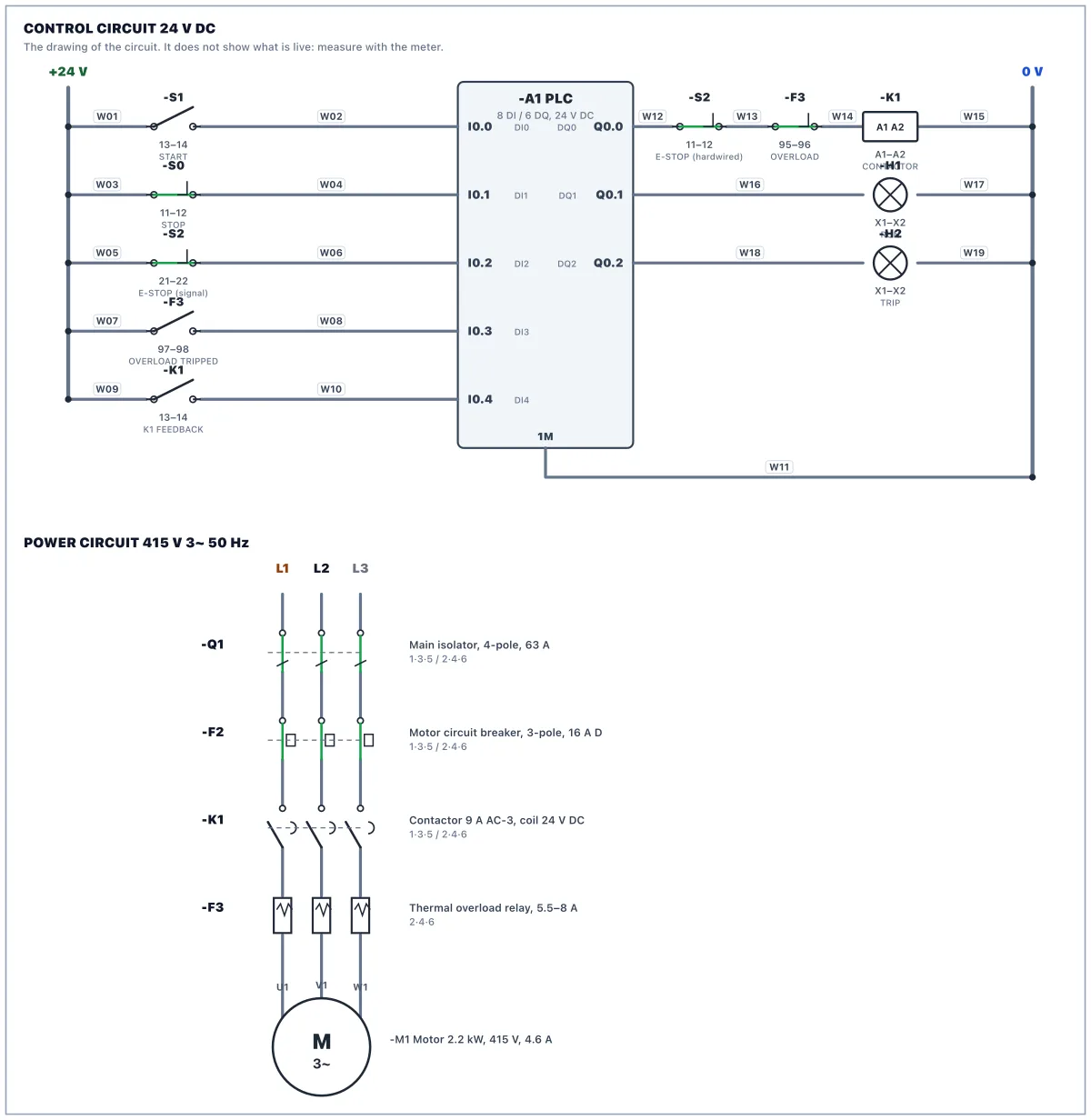
Commission the transfer-pump starterLock out, prove dead, wire the control circuit to the PLC, restore power and run the pump. A 415 V DOL starter with a 24 V PLC, built the way industrial panels are.
Level 2
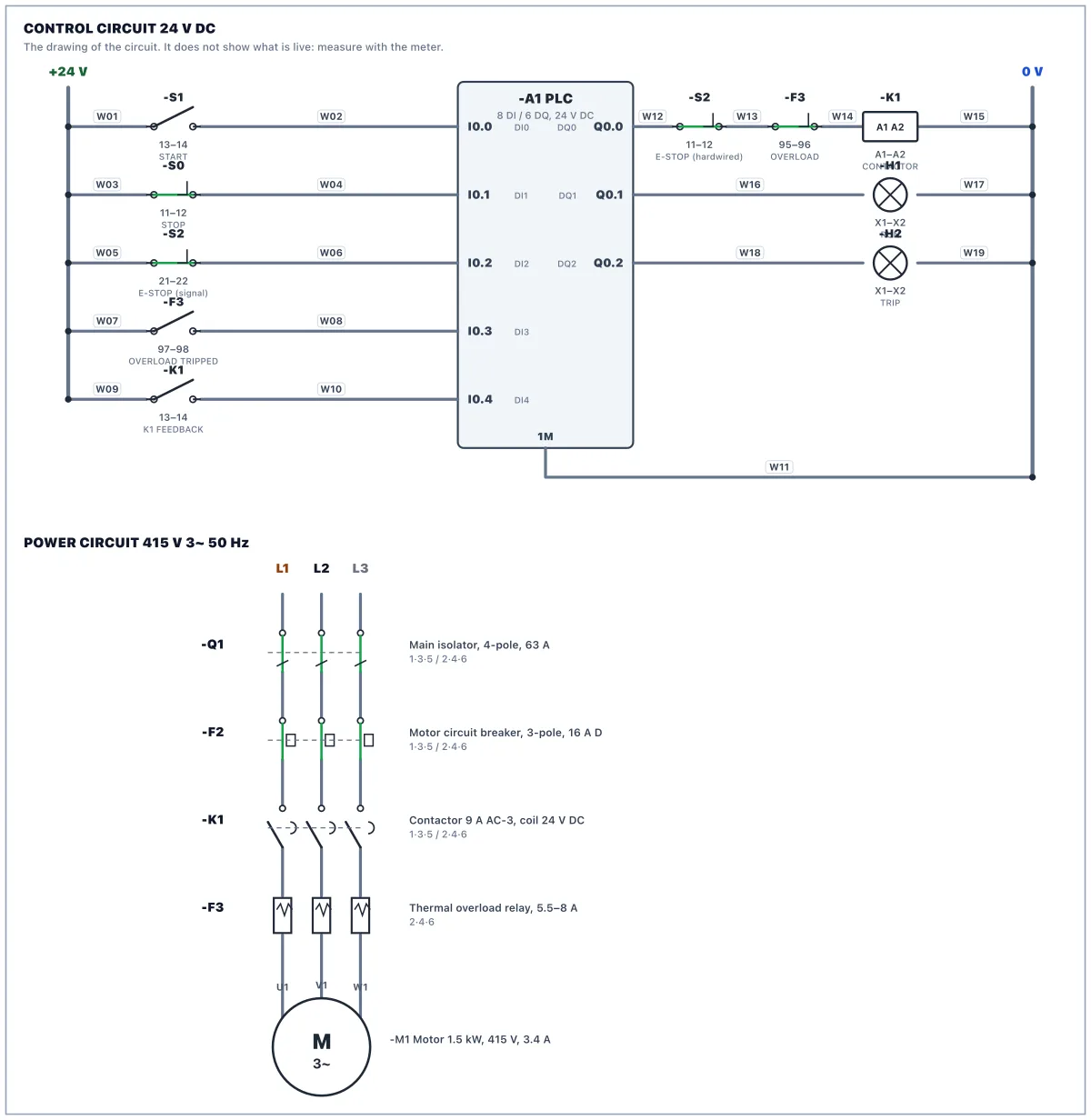
Fault-find the outfeed conveyor starterThe outfeed conveyor has stopped working. Observe the panel, measure live, find the fault, lock out and repair it, then prove it with a FAT. One of eight faults, a different one each task.
Level 3
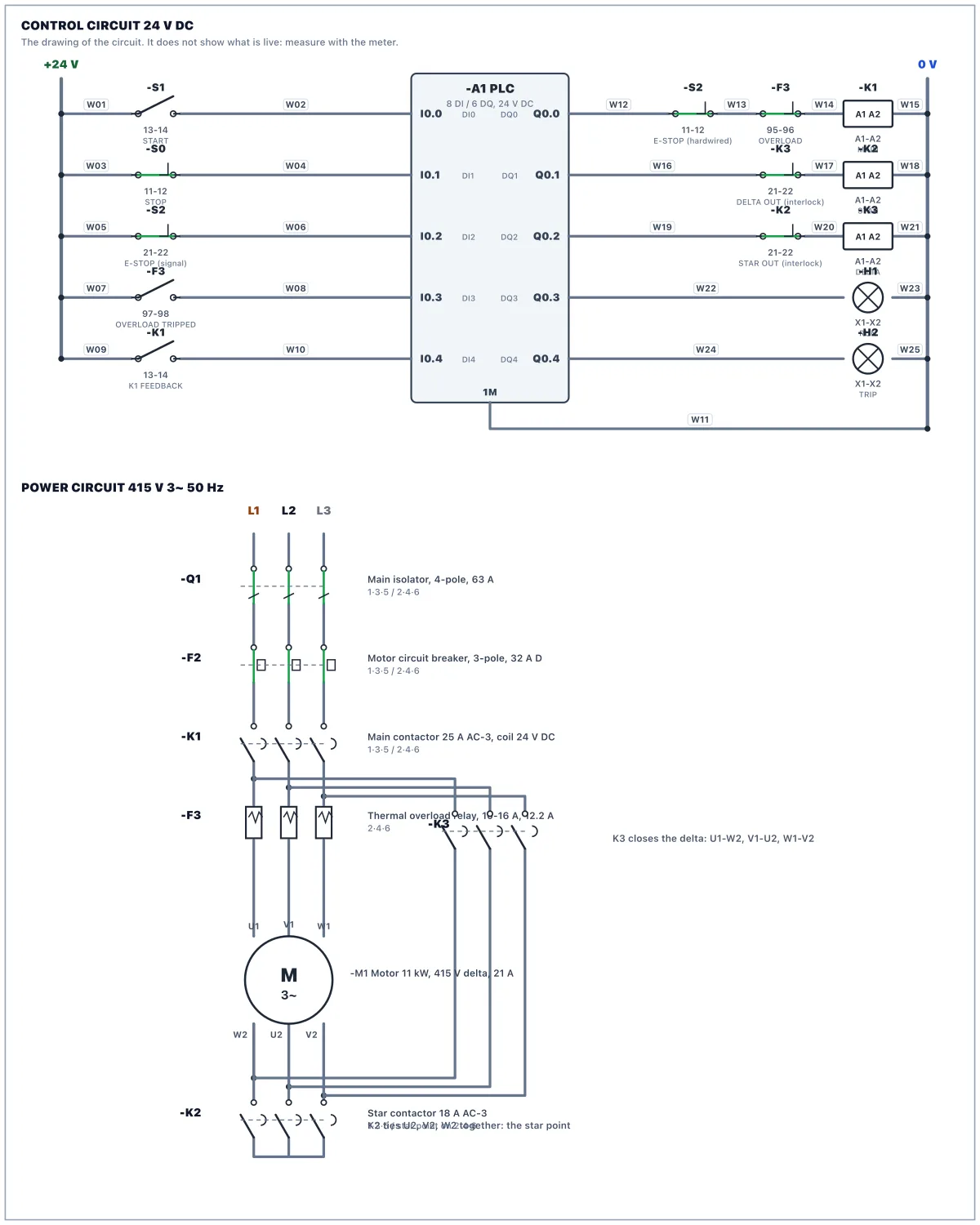
Commission the star-delta fan starterStart an 11 kW exhaust fan in star to hold the starting current down, then change over to delta. Main, star and delta contactors, a hardwired interlock and a timed changeover.
Level 4
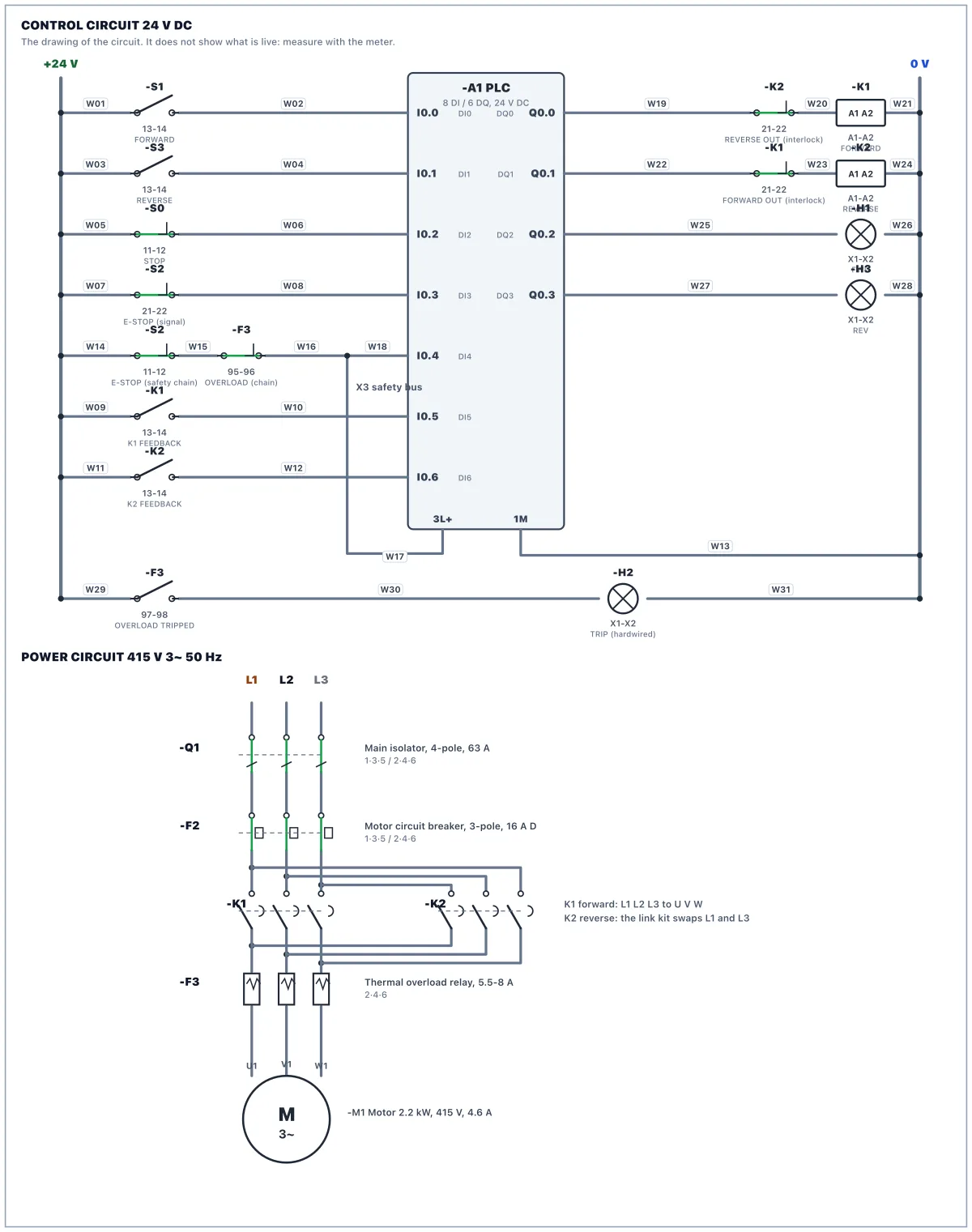
Commission the reversing conveyor starterRun a transfer conveyor forward and in reverse. Two interlocked contactors, a safety chain that powers the PLC outputs, a dwell time before reversing and a hardwired TRIP lamp.
Level 5
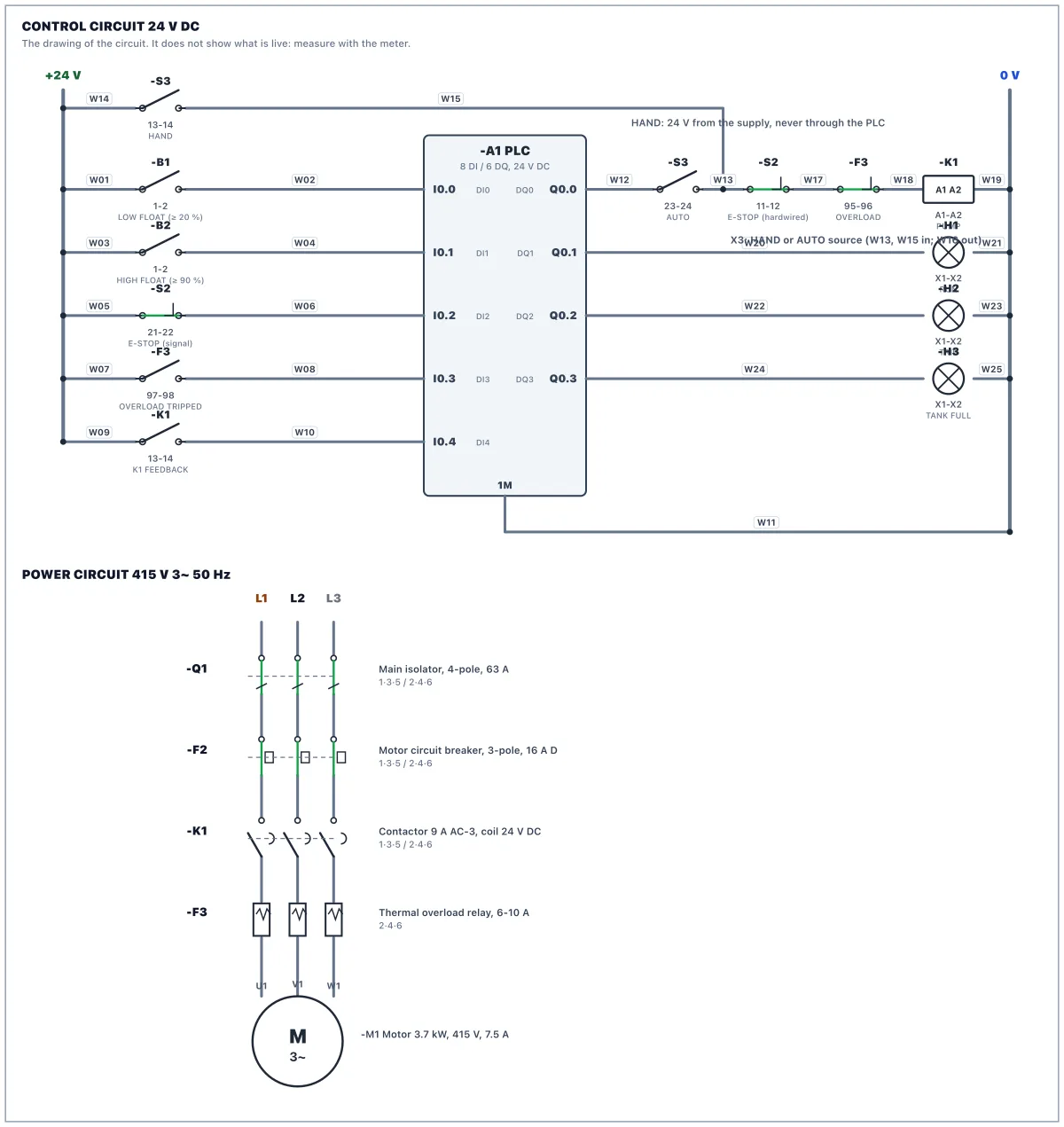
Commission the overhead tank pump (Hand/Off/Auto)Fill an overhead tank between two float switches, with a Hand/Off/Auto selector that works even when the PLC is stopped, and never bypasses the E-STOP or the overload.
Level 6
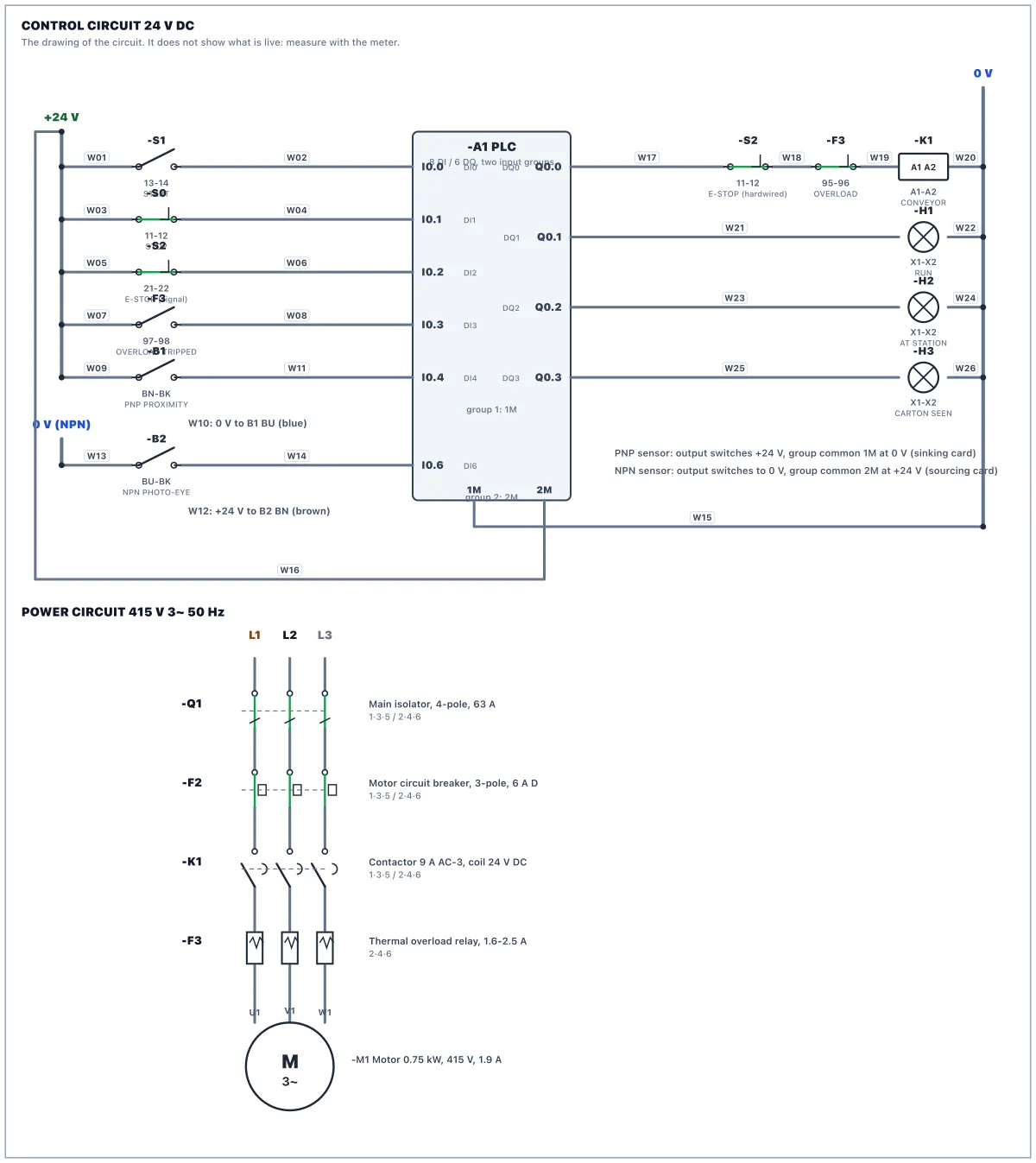
Commission the sorting station sensorsWire a 3-wire PNP proximity sensor and a 3-wire NPN photo-eye to the right input groups of a PLC, and prove each one: brown, blue, black, and the sinking and sourcing commons.
Level 7
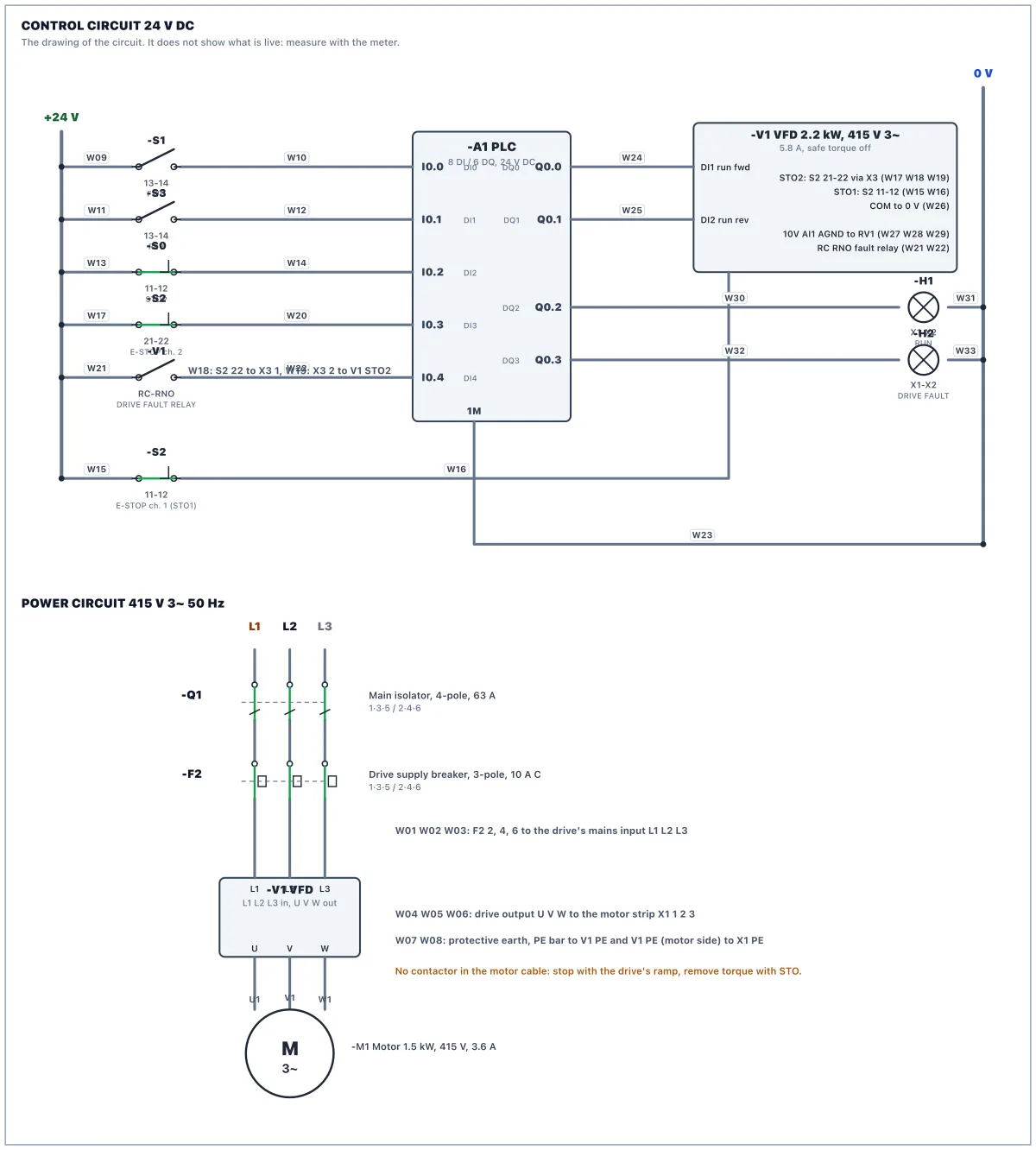
Commission the variable-speed infeed conveyor driveWire a variable frequency drive: mains in and motor out, two-channel safe torque off from the E-STOP, run commands from the PLC, a 0 to 10 V speed reference and a fault relay.
Level 8
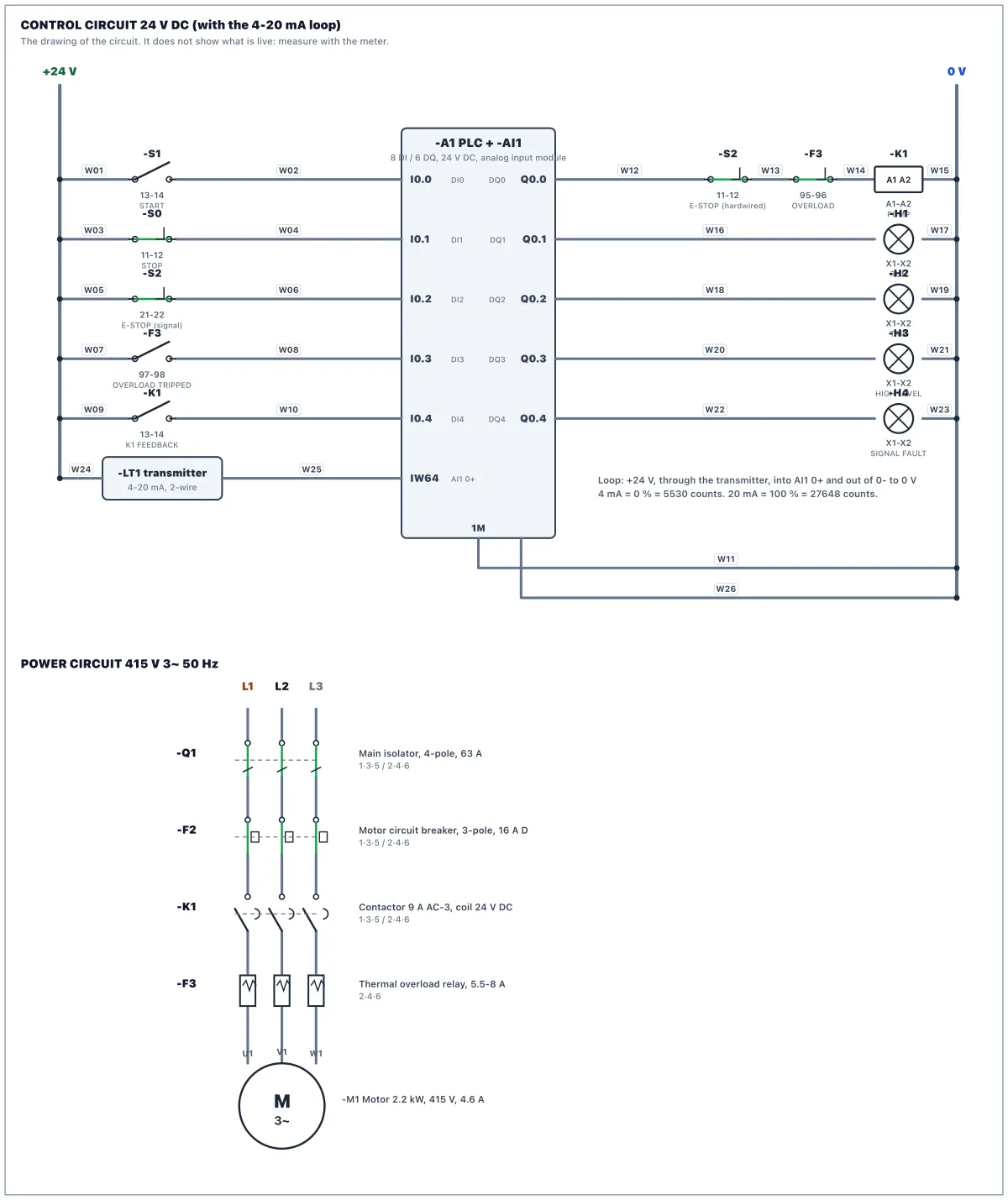
Commission the 4-20 mA level loopWire a 2-wire level transmitter into an analog input, scale the counts to percent, raise a high-level alarm, and see why a broken loop must read as a fault and not as an empty tank.
Level 9
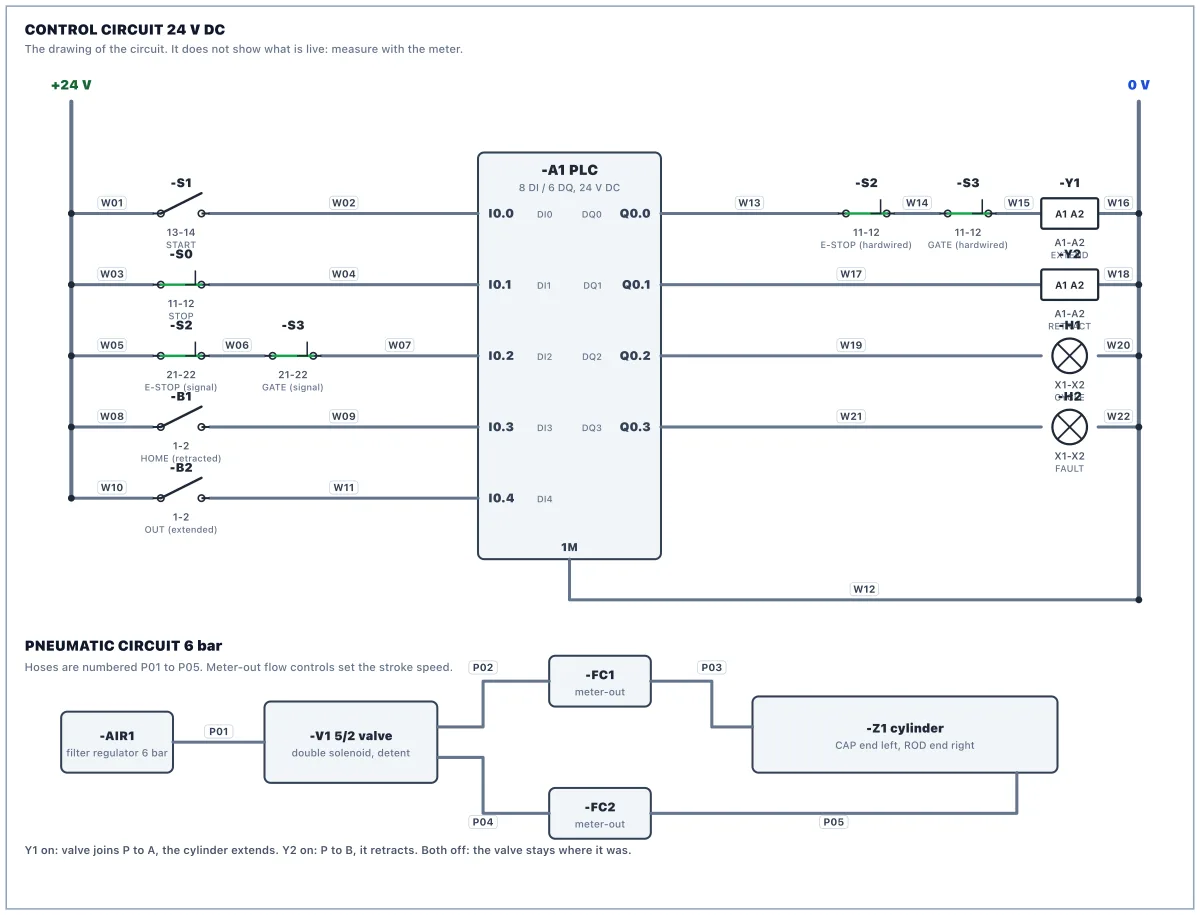
Commission the pneumatic pusher stationA 5/2 double-solenoid valve and a double-acting cylinder: wire the coils, hose the air circuit with its speed controls, read the reed switches, and keep the gate interlock hardwired.
Level 10
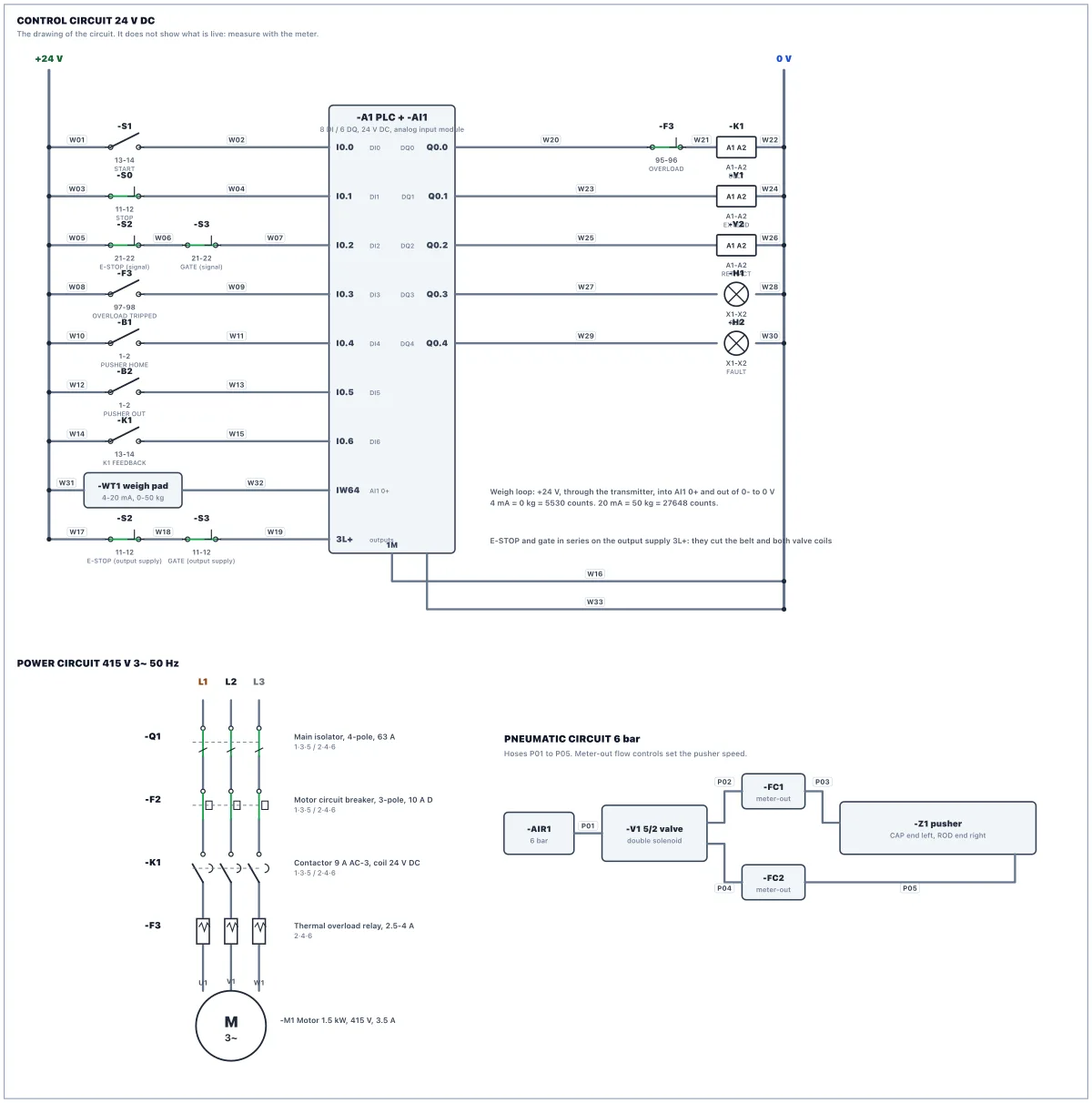
Commission the packing cell (capstone)Everything together: a belt starter, a 4-20 mA weigh pad, a pneumatic pusher with reed switches, and an E-STOP and gate that cut the whole cell. The FAT covers the cell from the first carton to the last.