Electrical · Free
Electrical Fundamentals for Technicians: Volts to Multimeter to Drawings
The electrical basics every technician needs, in the order you use them: charge, voltage, current and resistance; Ohm's and Kirchhoff's laws; AC and DC, single and three phase; power, energy and power factor; the multimeter and CAT ratings; cables, fuses, breakers, earthing and RCDs; IEC and NEMA symbols and schematics; relays, contactors and motors; safe isolation; and a fault-finding walkthrough.

Inside the course


From the lessons

What electricity is: charge, voltage and current
The Engineering Mindset
Kirchhoff's laws and voltage dividers
ElectroBOOM

AC and DC, and single-phase supplies
The Engineering Mindset
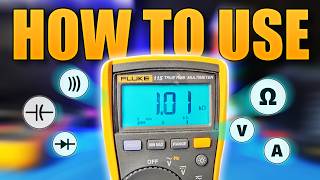
The multimeter: volts, amps, ohms, continuity and CAT ratings
The Engineering Mindset
Earthing, earth faults and RCDs
The Engineering Mindset
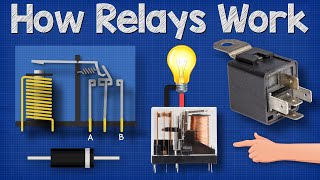
Relays, contactors and motors in brief
The Engineering Mindset
Lesson frames belong to the creators named in the Credits below and are shown from YouTube.
What you will learn
Explain charge, voltage, current and resistance; solve circuits with Ohm's and Kirchhoff's laws; tell AC from DC and work with RMS, single-phase and three-phase quantities; calculate power, energy and power factor; use a multimeter safely and choose one by its CAT rating; explain how cables, fuses, circuit breakers, earthing and RCDs protect people and equipment; read IEC and NEMA schematics; explain relays, contactors and induction motors; follow a safe isolation and prove-dead procedure; and find a fault logically with a drawing and a meter.
- Explain voltage, current, resistance and charge, and use Ohm's law
- Solve series and parallel circuits and check readings with Kirchhoff's laws
- Work with AC, RMS, single-phase and three-phase supplies
- Calculate power, energy in kWh and power factor
- Use a multimeter safely and choose one by its CAT rating
- Check cables, fuses and breakers, and explain earthing and RCDs
- Read IEC and NEMA symbols, schematics and a start-stop circuit
- Isolate and prove dead safely, and find faults with a drawing and a meter
For you
Taking Electrical Fundamentals for Technicians: Volts to Multimeter to Drawings from the United States
- Free in the United States, as everywhere, and self-paced: lessons, notes and the final assessment are open at any hour, so your time zone and shift pattern do not matter.
- The optional certificate for learners in the United States is a one-off US$23.99. What you get for it
- Plants across the Americas most often run Allen-Bradley, Siemens and Inductive Automation; each has its own free course to take next.
- See automation and engineering jobs in the United States, and what the industry looks like in Houston, Detroit and Chicago.
- EDWartens also has a regional site for the United States, for classroom training and local support: edwartens.com/us.
The course project · about 8 hours
Electrical survey of a small workshop: load list, cable check, safe isolation procedure, test record and fault report
Act as the new maintenance technician at a small packaging workshop: list its loads and currents, check each circuit's cable and protection, write the safe isolation procedure for the conveyor, complete a test record after a motor change, and write up a fault on the conveyor using the course's fault-finding method. The sample pack shows each document for a workshop near Lyon, France.
Sample document pack, 5 documents, filled in for the scenario
- Load listElectrical load list: workshop distribution board DB-1
- Cable scheduleCable schedule with voltage drop and protection check: DB-1 final circuits
- ProcedureSafe isolation procedure: conveyor drive motor M1
- Test reportTest record: conveyor circuit C-02 after replacement of motor M1
- ReportFault report: conveyor M1 stopping during the shift
Read inside the course and download as a workbook. The project is optional practice, marked when you submit it; the certificate needs only the modules and the final assessment.
Course content
14 modules · 47 lessons · 9h 24m
In order, at whatever pace suits you. Each module ends with a practice task that builds on the last.
- 01What electricity is: charge, voltage and current3 lessons33m
- 02Resistance, Ohm's law, series and parallel circuits4 lessons1h 6m
- 03Kirchhoff's laws and voltage dividers3 lessons35m
- 04Power, energy and efficiency3 lessons22m
- 05AC and DC, and single-phase supplies4 lessons29m
- 06Three-phase power and power factor4 lessons50m
- 07The multimeter: volts, amps, ohms, continuity and CAT ratings4 lessons1h 9m
- 08Cables, fuses and circuit breakers4 lessons43m
Requirements
- Who it is for
- Beginner. For new technicians, apprentice electricians, maintenance staff and PLC beginners. Arithmetic with a calculator is enough; no electrical experience is needed.
- Software
- None. A calculator, and a spreadsheet if you like one for the energy and cable exercises. What to download, and how
- Hardware
- None required. A multimeter rated CAT III 600 V or better, a battery and a few resistors make the practice tasks more real; never use it on mains circuits until you have been trained and are supervised.
Software you need
What to download, where from, what it costs and how to install it. Every link goes to the maker's own site, never a mirror.
Nothing to install
A calculator is enough; a spreadsheet (Excel, Google Sheets or LibreOffice Calc) helps with the energy and cable exercises.
Optional
Useful, not needed to finish the course.
- 01Free
LibreOffice
The Document Foundation
- Runs on
- Windows 10 or 11, macOS 11 or newer (Intel or Apple silicon), Linux
- Account
- None needed
- Size
- up to 1.5 GB of disk space on Windows
LibreOffice is free, open-source software under the Mozilla Public License 2.0, for any use including business. Calc is its spreadsheet.
Steps
- 1.Open the LibreOffice download page.
- 2.Check the page has picked your operating system, then select Download.
- 3.Run the installer (administrator rights are needed on Windows).
- 4.Start LibreOffice Calc for spreadsheet work.
- 5.Save as .xlsx if you need to share files with Excel users.
- Choose the latest main version unless your organisation asks for the older, more conservative release.
Official download pagelibreoffice.org
Checked against each maker's own page on 27 September 2026. Trial lengths and editions change; the maker's page is the final word.
Electrical Fundamentals for Technicians: Volts to Multimeter to Drawings at a glance
Electrical Fundamentals for Technicians: Volts to Multimeter to Drawings is a free, self-paced online course from EDWartens for new maintenance technicians, apprentice electricians and PLC beginners worldwide. It has 14 modules and 9h 24m of video lessons by The Engineering Mindset, Chris Guyatt, RealPars and others, with written notes and worked problems, a practical project with a document pack and a 15-question final assessment (pass mark 60%). Learning is free with an account; an optional certificate with a public verification code is issued when you pass. Last updated 27 September 2026.
All course factsHide course facts
- Price
- Free, for good. No trial, no card. The only paid item is the optional certificate, a small one-off fee.
- Who it is for
- New maintenance technicians, apprentice electricians and PLC beginners worldwide
- Format
- 14 self-paced modules, 9h 24m of video, written notes, a practice task per module and one final assessment.
- Level
- Beginner. Beginner. For new technicians, apprentice electricians, maintenance staff and PLC beginners. Arithmetic with a calculator is enough; no electrical experience is needed.
- Brand
- Vendor-neutral
- Software
- None. A calculator, and a spreadsheet if you like one for the energy and cable exercises.
- Hardware
- None required. A multimeter rated CAT III 600 V or better, a battery and a few resistors make the practice tasks more real; never use it on mains circuits until you have been trained and are supervised.
- Certificate
- Optional EDWartens Certificate of Completion, verifiable by code. Not a vendor credential.
- Video lessons by
- The Engineering Mindset, Chris Guyatt, RealPars, ElectroBOOM, eFIXX, GSH Electrical (independent creators, credited below)
- Language
- English
- Last updated
- 27 September 2026
A shareable EDWartens certificate
Finish every module and pass the final assessment, and the optional EDWartens certificate is yours. It carries a unique verification code on a public page anyone can check, so it stands up when a recruiter looks it up. See it below.
The course itself stays free whether or not you ever buy one.
Stuck? Ask a practising engineer
A free course usually means a comment section and hope. This one does not. Every module has an Ask-your-trainer panel that reaches the same engineers who teach our paid programme: people who commission panels for a living, not moderators.
Pairs well with
 Electrical · FreeETAP Power System Analysis: Load Flow, Short Circuit, Protection, Arc Flash and StabilityThe power-system studies every substation, plant and data-centre project needs, done in ETAP: single-line modelling, load flow and the per-unit system, cable and transformer sizing, short circuit by IEC 60909 and ANSI, relay setting and coordination with Star view, differential, distance, busbar and motor protection, arc flash, capacitor placement and power factor, motor starting and re-acceleration, transient stability, harmonics and filters, and earthing grid design.
 PLC programming · FreeSiemens TIA PortalFrom zero electrical knowledge to a working, simulated S7-1200 program, for nothing.
 PLC programming · FreeSiemens TIA Portal in Three HoursThe first three hours of the Siemens TIA Portal course, cut to end on a win: what a PLC is, how it is wired, a project configured in TIA Portal, and your first ladder program running in simulation. Finish it in an evening or two, earn a certificate, and carry straight on into the full course.
 PLC programming · FreeTIA Portal: Build a MachineOne machine, start to finish. Take a bottle filling line from a written specification and an I/O list to a structured S7-1200 program with a fill station, a capper, a reject sorter and an operator screen with alarms, then test it against a written record and archive it for hand-over. The lessons are the reference; the machine is yours, and it is what you submit.
More free courses: Free electrical design and control panel courses
Learning paths with this course
- Electrical and mechanical fundamentals · 4 coursesBefore the PLC: the electrical basics a technician works by, motor control with contactors and starters, pneumatics and hydraulics, and the control panel that holds it all. The base every automation engineer stands on.
Learner reviews
No reviews yet
Reviews here are written only by learners who have finished every module of Electrical Fundamentals for Technicians: Volts to Multimeter to Drawings, and they are published exactly as written. Finish the course and yours will be the first.
Common questions
Who is the Electrical Fundamentals for Technicians course for?
New maintenance technicians, apprentice electricians, PLC beginners and anyone starting work around electrical equipment. No electrical experience is needed; arithmetic with a calculator is enough.
Is this an electrician's licence or a recognised electrical qualification?
No. It teaches the fundamentals and leads to an EDWartens Certificate of Completion. It is not an electrician's licence or a regulated qualification, and it does not authorise installation work. Local wiring rules, such as BS 7671 in the UK, the NEC (NFPA 70) in the United States and IS 732 in India, and the licensing rules where you work, govern who may do real installation work and how.
Does it follow British, American or Indian practice?
The physics is the same everywhere. The notes use 230/400 V, 50 Hz values with the North American 120/240 V and 60 Hz equivalents beside them, and teach both IEC and NEMA drawing symbols, so the course is useful worldwide. Always learn the rules of the country you work in.
Do I need a multimeter or any equipment?
No. Every practice task can be done with a calculator, rating plates and drawings. A multimeter, a battery and a few resistors make the meter exercises more real; never use a meter on mains circuits until you have been trained and are supervised.
Is the Electrical Fundamentals for Technicians course really free?
Yes. Every module, the notes, the project and the final assessment. The only paid item is the certificate, if you want it.
What certificate does the Electrical Fundamentals for Technicians course give?
An EDWartens Certificate of Completion, issued when you pass the final assessment, with a number anyone can verify on our site. It is not an electrician's licence or a regulated qualification.
How long does the Electrical Fundamentals for Technicians course take?
About 14 hours of video lessons, notes and practice questions, taken at your own pace. The first module is a short, friendly start. The optional project takes about 8 hours more.
What is the project in the Electrical Fundamentals for Technicians course?
You survey a small packaging workshop as its new maintenance technician: a load list with currents, a cable and protection check with voltage drop, a safe isolation procedure for the conveyor, a test record after a motor change, and a fault report on a conveyor that keeps stopping. A complete sample pack shows each document.
What should I take next?
Industrial Motor Control, then Control Panel Design and Building, and then a PLC course such as Siemens TIA Portal.
What you walk away with
Your certificate for Electrical Fundamentals for Technicians: Volts to Multimeter to Drawings
Finish the course, pass the final, and this is the document with your name on it.

Verifiable by anyone
Adds to LinkedIn in one click
QR code on the certificate
Names what you can do
A permanent link
Earned, not attended
Learning is free. The certificate is optional.
Add it now and pay only when you have finished the course, or come back for it later. One-off, US$23.99, with a receipt.
Issued by EDWartens, the training division of Wartens, as a Certificate of Completion for this self-paced course. Sold by Wartens Ltd (England and Wales). It is not a vendor certification, a university award or a CPD-accredited activity, and it does not certify competence on live equipment. Delivered electronically; see the refund policy.
Credits
Who made the video lessons
The video lessons in this course were created by the people below, not by EDWartens. Every lesson streams from its creator's own YouTube channel; EDWartens neither hosts nor sells that footage, and the creators are not affiliated with EDWartens and do not endorse this course. What EDWartens wrote is the study plan, the notes, the practice tasks and the assessments.
- The Engineering Mindsetthe core lessons: how electricity works, voltage, current, Ohm's law, series and parallel circuits, resistors, AC and DC, RMS, single-phase and split-phase supplies, three-phase electricity and its calculations, power factor, the kilowatt hour, the multimeter and the clamp meter, fuses and current, why circuit breakers do not protect people, the ground wire and ground faults, relays and induction motors
- Chris Guyattreading electrical drawings on a real control panel, how a relay appears in a schematic, fault-finding control panels, and why beginners should master schematics first
- RealParsthe lessons on circuit breakers, contactors and industrial electrical troubleshooting
- ElectroBOOMthe lesson on the lumped model and Kirchhoff's circuit laws
- The Organic Chemistry Tutorworked problems on Kirchhoff's current law, and on electric power and the cost of electricity in kWh
- ALL ABOUT ELECTRONICSthe lesson on Kirchhoff's voltage law
- Techquickiethe short explainer on volts, amps and watts
- Fluke Corporationthe short lesson on what CAT ratings are and why they matter
- Electrician Uthe lesson on what multimeter CAT ratings mean
- Craig Michaud- Electrical Instructorthe lesson on voltage drop calculations
- Gaurav J - TheElectricalGuythe guide to earthing systems: TT, TN-S, TN-C, TN-C-S and IT
- eFIXXthe lesson on what a residual current device is and how it works
- The Maintenance Factorythe lesson on basic electrical symbols
- betechnical.cathe comparison of NEMA and IEC schematic symbols and drawings
- Safelyiothe electrical lockout/tagout procedure lesson
- Martindale Electricthe step-by-step safe isolation procedure with a voltage indicator and proving unit
- GSH Electricalthe demonstration of safe isolation of a single-phase consumer unit
If you are one of these creators and would like a lesson removed or credited differently, write to info@wartens.com.