Instrumentation · Free
Instrument Calibration, Loop Checks and Commissioning
Calibrate pressure, temperature, level and flow transmitters to a written procedure, then run the cold and hot loop checks that hand a plant over: calibration vocabulary and TUR, the 5-point as-found and as-left test, DP flow and level, RTDs and thermocouples, 4-20 mA and HART, switches, valve stroke checks, loop folders and calibration management.

Inside the course


From the lessons
![Instrumentation Calibration - [An Introduction]](https://i.ytimg.com/vi/SamV6zpRNgg/mqdefault.jpg)
Calibration vocabulary: range, span, accuracy, uncertainty and TUR
Instrumentation & Control

Pressure and DP transmitters: hand pump, reference gauge and square-root flow
BeamexCalibration

Level: DP level with wet and dry legs, suppression, elevation and guided-wave radar
ECAS

HART: what it carries, trim versus re-range, communicators and DD tools
RealPars
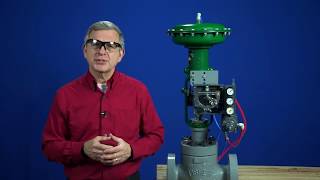
Control valve stroke check and positioner calibration
Fisher Valves & Instruments

Hot loop check, pre-commissioning and handover records
ICxA
Lesson frames belong to the creators named in the Credits below and are shown from YouTube.
What you will learn
Use calibration vocabulary correctly and check a reference with a test uncertainty ratio; run a 5-point as-found and as-left calibration and decide pass or fail; calibrate pressure, DP flow, temperature and DP level transmitters, including square-root, wet-leg and suppressed ranges; work the 4-20 mA loop maths and a loop voltage budget; choose between a HART re-range and a trim; test switches and trips for set point and deadband; stroke-check a control valve; run cold and hot loop checks and fill in the records; and set calibration intervals and keep a register an auditor can follow.
- Calculate span, percent-of-span error and a test uncertainty ratio, and judge whether a reference is good enough
- Run a 5-point as-found and as-left calibration and write a record someone can sign
- Calibrate pressure and DP flow transmitters, including square-root flow
- Check RTDs and thermocouples, with lead resistance and cold-junction compensation
- Work out DP level ranges with wet legs, suppression and elevation, and set up guided-wave radar
- Do the 4-20 mA arithmetic and a loop voltage budget, and use a loop calibrator in the right mode
- Choose between a HART sensor trim, output trim and re-range
- Run cold and hot loop checks, raise punch items and set calibration intervals
For you
Taking Instrument Calibration, Loop Checks and Commissioning from the United States
- Free in the United States, as everywhere, and self-paced: lessons, notes and the final assessment are open at any hour, so your time zone and shift pattern do not matter.
- The optional certificate for learners in the United States is a one-off US$23.99. What you get for it
- Plants across the Americas most often run Allen-Bradley, Siemens and Inductive Automation; each has its own free course to take next.
- See automation and engineering jobs in the United States, and what the industry looks like in Houston, Detroit and Chicago.
- EDWartens also has a regional site for the United States, for classroom training and local support: edwartens.com/us.
The course project · about 10 hours
Calibrating five transmitters and loop-checking a level loop on a condensate stabiliser before start-up
Act as the instrument technician on a gas plant expansion: calibrate five transmitters (pressure, DP flow, DP level with a wet leg, RTD and thermocouple temperature) with as-found and as-left records, put them in a calibration register with intervals, run the cold and hot loop check on the level control loop, and raise the punch items you find. The sample pack shows each document for a unit near Sohar, Oman.
Sample document pack, 5 documents, filled in for the scenario
- Calibration recordPT-2104 stabiliser pressure transmitter
- Calibration recordTT-2110 bottoms temperature, Pt100 and transmitter
- RegisterUnit 21 transmitters, calibration status and intervals
- Loop checkLIC-2120 bottoms level control
- Punch listUnit 21 instruments, open items before start-up
Read inside the course and download as a workbook. The project is optional practice, marked when you submit it; the certificate needs only the modules and the final assessment.
Course content
13 modules · 41 lessons · 7h 18m
In order, at whatever pace suits you. Each module ends with a practice task that builds on the last.
- 01Calibration vocabulary: range, span, accuracy, uncertainty and TUR4 lessons20m
- 02The 5-point as-found and as-left calibration and the certificate3 lessons25m
- 03Pressure and DP transmitters: hand pump, reference gauge and square-root flow3 lessons32m
- 04Temperature: RTD and thermocouple checks, dry blocks and cold-junction compensation4 lessons28m
- 05Level: DP level with wet and dry legs, suppression, elevation and guided-wave radar4 lessons31m
- 064-20 mA loop maths, loop power, the 250 ohm resistor and loop calibrators3 lessons1h 5m
- 07HART: what it carries, trim versus re-range, communicators and DD tools4 lessons1h 25m
- 08Switches and trips: set point, deadband and alarm testing3 lessons17m
Requirements
- Who it is for
- Beginner to intermediate. For instrument technicians, diploma and engineering graduates in instrumentation, electrical or electronics, and plant staff moving into commissioning. You should know what a transmitter is; arithmetic with a calculator is enough.
- Software
- A spreadsheet (Excel, Google Sheets or LibreOffice Calc) for the calibration sheets and register. No calibration software is needed. What to download, and how
- Hardware
- None required. A loop calibrator or process meter, a hand pump and a spare transmitter make the practice tasks real, but every task can be done on paper.
Software you need
What to download, where from, what it costs and how to install it. Every link goes to the maker's own site, never a mirror.
Nothing to install
A spreadsheet (Excel, Google Sheets or LibreOffice Calc) is enough for the calibration sheets, the register and the loop check.
Optional
Useful, not needed to finish the course.
- 01Free
LibreOffice
The Document Foundation
- Runs on
- Windows 10 or 11, macOS 11 or newer (Intel or Apple silicon), Linux
- Account
- None needed
- Size
- up to 1.5 GB of disk space on Windows
LibreOffice is free, open-source software under the Mozilla Public License 2.0, for any use including business. Calc is its spreadsheet.
Steps
- 1.Open the LibreOffice download page.
- 2.Check the page has picked your operating system, then select Download.
- 3.Run the installer (administrator rights are needed on Windows).
- 4.Start LibreOffice Calc for spreadsheet work.
- 5.Save as .xlsx if you need to share files with Excel users.
- Choose the latest main version unless your organisation asks for the older, more conservative release.
Official download pagelibreoffice.org
Checked against each maker's own page on 27 September 2026. Trial lengths and editions change; the maker's page is the final word.
Instrument Calibration, Loop Checks and Commissioning at a glance
Instrument Calibration, Loop Checks and Commissioning is a free, self-paced online course from EDWartens for instrument technicians, diploma and engineering graduates, and E&I commissioning staff worldwide, including the Gulf. It has 13 modules and 7h 18m of video lessons by Beamex, Instrumentation & Control, RealPars and others, with written notes and worked problems, a practical project with a document pack and a 15-question final assessment (pass mark 60%). Learning is free with an account; an optional certificate with a public verification code is issued when you pass. Last updated 27 September 2026.
All course factsHide course facts
- Price
- Free, for good. No trial, no card. The only paid item is the optional certificate, a small one-off fee.
- Who it is for
- Instrument technicians, diploma and engineering graduates, and E&I commissioning staff worldwide, including the Gulf
- Format
- 13 self-paced modules, 7h 18m of video, written notes, a practice task per module and one final assessment.
- Level
- Beginner. Beginner to intermediate. For instrument technicians, diploma and engineering graduates in instrumentation, electrical or electronics, and plant staff moving into commissioning. You should know what a transmitter is; arithmetic with a calculator is enough.
- Brand
- Vendor-neutral
- Software
- A spreadsheet (Excel, Google Sheets or LibreOffice Calc) for the calibration sheets and register. No calibration software is needed.
- Hardware
- None required. A loop calibrator or process meter, a hand pump and a spare transmitter make the practice tasks real, but every task can be done on paper.
- Certificate
- Optional EDWartens Certificate of Completion, verifiable by code. Not a vendor credential.
- Video lessons by
- Beamex, Instrumentation & Control, RealPars, Calibration Academy, Precision Digital, Fisher (Emerson) (independent creators, credited below)
- Language
- English
- Last updated
- 27 September 2026
A shareable EDWartens certificate
Finish every module and pass the final assessment, and the optional EDWartens certificate is yours. It carries a unique verification code on a public page anyone can check, so it stands up when a recruiter looks it up. See it below.
The course itself stays free whether or not you ever buy one.
Stuck? Ask a practising engineer
A free course usually means a comment section and hope. This one does not. Every module has an Ask-your-trainer panel that reaches the same engineers who teach our paid programme: people who commission panels for a living, not moderators.
Pairs well with
 PLC programming · FreeSiemens TIA PortalFrom zero electrical knowledge to a working, simulated S7-1200 program, for nothing.
 PLC programming · FreeSiemens TIA Portal in Three HoursThe first three hours of the Siemens TIA Portal course, cut to end on a win: what a PLC is, how it is wired, a project configured in TIA Portal, and your first ladder program running in simulation. Finish it in an evening or two, earn a certificate, and carry straight on into the full course.
 PLC programming · FreeTIA Portal: Build a MachineOne machine, start to finish. Take a bottle filling line from a written specification and an I/O list to a structured S7-1200 program with a fill station, a capper, a reject sorter and an operator screen with alarms, then test it against a written record and archive it for hand-over. The lessons are the reference; the machine is yours, and it is what you submit.
 Instrumentation · FreeInstrumentation for PLC EngineersThe half of the loop that is not code. Follow one measurement from the transmitter in the field, down the 4-20 mA loop, into the analog card, through NORM_X and SCALE_X into engineering units, out again to a valve, and back to the control room when the reading is wrong.
More free courses: Free instrumentation and process control courses
Learner reviews
No reviews yet
Reviews here are written only by learners who have finished every module of Instrument Calibration, Loop Checks and Commissioning, and they are published exactly as written. Finish the course and yours will be the first.
Common questions
Who is the Instrument Calibration, Loop Checks and Commissioning course for?
Instrument technicians, diploma and engineering graduates in instrumentation, electrical or electronics, and plant and E&I staff moving into commissioning, in the Gulf, Asia, Europe and elsewhere. You should know what a transmitter is; arithmetic with a calculator is enough.
Does this course prepare me for the ISA CCST?
It covers a good part of the ground the ISA Certified Control Systems Technician (CCST) Level I exam covers, such as calibration, loop checking and commissioning, but it is not ISA preparation material and it does not award the CCST. The EDWartens certificate is a certificate of completion.
Do I need calibration equipment or software?
No. Every practice task and the project can be done on paper or in a spreadsheet with the readings given. A loop calibrator, a hand pump and a spare transmitter make the tasks more real if you have them.
Which standards does it follow?
It works to common plant practice and names the standards where they apply: IEC 60751 for Pt100 sensors, NAMUR NE 43 for failure currents, ISO/IEC 17025 for calibration laboratories and traceability, and the HART protocol. It paraphrases them and does not reproduce their text.
How long does the Instrument Calibration, Loop Checks and Commissioning course take?
About 12.7 hours of video lessons, notes and practice, taken at your own pace; the videos alone are about 7.3 hours. The optional project, calibrating five transmitters and loop-checking a level loop on a gas plant unit, takes about 10 hours more.
Is the Instrument Calibration, Loop Checks and Commissioning course really free?
Yes. Every module, the notes, the project and the final assessment. The only paid item is the certificate, if you want it.
What certificate does the Instrument Calibration, Loop Checks and Commissioning course give?
An EDWartens Certificate of Completion, issued when you pass the final assessment, with a number anyone can verify on our site. It is not an ISA certificate or a calibration laboratory accreditation.
What jobs does it lead to?
Instrument technician, calibration technician and E&I commissioning technician roles in oil and gas, power, chemicals, pharmaceuticals and water, including the many commissioning and maintenance roles in the Gulf. Go on to Industrial Instrumentation and Process Control, or Safety Instrumented Systems and SIL to IEC 61511.
What you walk away with
Your certificate for Instrument Calibration, Loop Checks and Commissioning
Finish the course, pass the final, and this is the document with your name on it.

Verifiable by anyone
Adds to LinkedIn in one click
QR code on the certificate
Names what you can do
A permanent link
Earned, not attended
Learning is free. The certificate is optional.
Add it now and pay only when you have finished the course, or come back for it later. One-off, US$23.99, with a receipt.
Issued by EDWartens, the training division of Wartens, as a Certificate of Completion for this self-paced course. Sold by Wartens Ltd (England and Wales). It is not a vendor certification, a university award or a CPD-accredited activity, and it does not certify competence on live equipment. Delivered electronically; see the refund policy.
Credits
Who made the video lessons
The video lessons in this course were created by the people below, not by EDWartens. Every lesson streams from its creator's own YouTube channel; EDWartens neither hosts nor sells that footage, and the creators are not affiliated with EDWartens and do not endorse this course. What EDWartens wrote is the study plan, the notes, the practice tasks and the assessments.
- Beamexthe calibration lessons: pressure transmitters and a pressure loop, HART pressure transmitters, RTD temperature transmitters and Pt100 sensors, pressure and temperature switches, a HART valve linearity test, the long lesson on calibrating and trimming HART transmitters, and the webinar on how often instruments should be calibrated
- Instrumentation & Controlthe introduction to instrumentation calibration, the guided-wave radar echo curve, sourcing and simulating 4-20 mA with a process meter, the pressure transmitter re-range workshop, reading a loop diagram and common 4-20 mA loop faults
- RealParsthe lessons on what an instrument calibrator is and what the HART protocol is
- Calibration AcademyDP flow transmitter zero and span, thermocouple cold-junction compensation and loop resistance, sensor trim against current trim, and an analog loop test on a Rosemount 3051
- Precision Digitalthe full lesson on the fundamentals of 4-20 mA current loops
- Fisher Valves & Instruments (Emerson)zero and span calibration of a Fisher 3582 positioner
- Siemens Knowledge Hubconfiguring the SIPART PS2 valve positioner
- Endress+Hausercommissioning Levelflex and Micropilot radar level instruments, and calibration interval optimisation
- Spartan Controlsconfiguring a Rosemount 5300 guided-wave radar level transmitter
- ECASthe wet-leg level transmitter's purpose and set-up, and how to read and navigate loop diagrams
- Morehouse Instrument Companythe lessons on test uncertainty ratio and on accuracy against uncertainty
- Mensorwhat k = 2 means on a calibration certificate
- RJ Quality Consultingthe ISO/IEC 17025 calibration certificate requirements
- Analog Devicesthe short lesson on thermocouple cold-junction compensation
- Tim Wilbornehow to measure a 4-20 mA circuit without blowing the meter's fuse
- Ashcroftthe calibration procedure for single set point pressure switches
- ICxAthe difference between pre-commissioning and commissioning
- IIQAinstrument commissioning questions from pre-commissioning to handover
- Kistler Groupsetting the initial calibration interval and adjusting it
If you are one of these creators and would like a lesson removed or credited differently, write to info@wartens.com.