Building automation · Free
Building Management Systems (BMS): HVAC Control, BACnet and Building Automation
How a modern building is controlled: BMS overview, components and architecture, sensors, actuators, controllers and field devices, BACnet, Modbus, LonWorks and KNX, HVAC applications for AHUs, chillers, cooling towers and boilers, pumps, tanks and hot water, lighting, access, CCTV, fire and energy integration, DDC panels, wiring and control logic, the front end with graphics, trends, schedules and alarms, testing, commissioning and handover, BACnet with Python, and case studies from hotels to data centres.
Inside the course


From the lessons
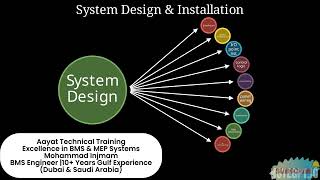
What a BMS Is: Overview, Components and Architecture
Aayat Technical

Communication Protocols and Networking
Aayat Technical

Pumps, Tanks and Hot Water Applications
smart training center
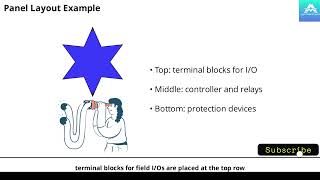
DDC Panels, Wiring and Control Logic
Aayat Technical

Testing, Commissioning, Validation, Handover and Integration
Aayat Technical

BACnet Logging, Edge Apps and BACnet Servers
TalkShopWithBen
Lesson frames belong to the creators named in the Credits below and are shown from YouTube.
What you will learn
Describe a BMS architecture from field devices to servers, choose sensors, actuators and controllers for HVAC, lighting, fire and security integration, read and design an I/O point list, explain BACnet, Modbus, LonWorks and KNX, write control sequences for AHUs, chillers, boilers and pumps, configure graphics, trends, schedules and alarms, plan testing, commissioning and handover, and read and write BACnet points with Python.
- Explain BMS architecture, components and field devices
- Design I/O point lists and choose protocols
- Write sequences of operation for AHUs, chillers, boilers and pumps
- Integrate lighting, security, fire and energy systems
- Design DDC panels, graphics, trends, schedules and alarms
- Commission a BMS and read and write BACnet with Python
For you
Taking Building Management Systems (BMS): HVAC Control, BACnet and Building Automation from the United States
- Free in the United States, as everywhere, and self-paced: lessons, notes and the final assessment are open at any hour, so your time zone and shift pattern do not matter.
- The optional certificate for learners in the United States is a one-off US$23.99. What you get for it
- Plants across the Americas most often run Allen-Bradley, Siemens and Inductive Automation; each has its own free course to take next.
- See automation and engineering jobs in the United States, and what the industry looks like in Houston, Detroit and Chicago.
- EDWartens also has a regional site for the United States, for classroom training and local support: edwartens.com/us.
The course project · about 18 hours
Six-floor IT office BMS: points list to signed commissioning scripts on BACnet
Design and document the BMS for a six-floor office in Bangkok: two 250 TR chillers with pumps and cooling towers, six VAV air handlers with trim-and-respond resets per ASHRAE Guideline 36, 72 VAV boxes on MS/TP, exhaust fans and a fire-alarm interface, supervised from Desigo CC. You deliver the points list, the sequence of operation, the network architecture, a BAC0 simulation that proves the resets, and your own commissioning record. The sample pack shows what a controls contractor submits to the consultant.
Sample document pack, 8 documents, filled in for the scenario
- Points listBMS Points List: Block 1 HVAC
- Control narrativeSequence of Operation: AHUs, VAV Boxes and Chiller Plant (ASHRAE Guideline 36)
- Network architectureBMS Network Architecture and Address Plan
- Alarm listAlarm List: Block 1 BMS
- HMI specDesigo CC Graphics Hierarchy and Screen Specification
- BOMBill of Materials: DDC Panels, Network and Field Devices
- Commissioning procedureCommissioning Procedure and Functional Test Record: AHU-3 and Chiller Plant
- O&M manualOperation and Maintenance Manual: Block 1 BMS (Operation section)
Read inside the course and download as a workbook. The project is optional practice, marked when you submit it; the certificate needs only the modules and the final assessment.
Course content
13 modules · 61 lessons · 13h 46m
In order, at whatever pace suits you. Each module ends with a practice task that builds on the last.
- 01What a BMS Is: Overview, Components and Architecture4 lessons13m
- 02Sensors, Actuators, Controllers and Point Lists3 lessons12m
- 03Communication Protocols and Networking2 lessons10m
- 04HVAC Control Applications: AHU, VAV and FCU, Chiller, Cooling Tower and Boiler7 lessons1h 45m
- 05Pumps, Tanks and Hot Water Applications7 lessons46m
- 06Lighting, Security, Fire, Energy and Water Integration5 lessons36m
- 07DDC Panels, Wiring and Control Logic3 lessons17m
- 08The Front End: Graphics, Trends, Schedules, Alarms and Users4 lessons27m
Requirements
- Who it is for
- Beginner. For electrical, HVAC and automation engineers moving into buildings.
- Software
- Python 3 with BAC0 for the BACnet modules (free); any BMS front end is optional. What to download, and how
- Hardware
- None required. A BACnet/IP simulator or a small DDC controller helps with the Python modules.
Software you need
What to download, where from, what it costs and how to install it. Every link goes to the maker's own site, never a mirror.
Any BMS front end is optional.
Required
- 01Free
Python
Python Software Foundation
- Runs on
- Windows (not Windows 7 or earlier), macOS and Linux. Windows builds for x64, 32-bit and Arm64.
- Account
- None needed
Python is free, open source software. You can use it for learning and for commercial work at no cost.
Steps
- 1.Open python.org/downloads and click the download button for your system.
- 2.On Windows, run the Python install manager (or the classic 64-bit installer) you downloaded.
- 3.If you use the classic installer, tick "Add python.exe to PATH" on the first screen, then click Install Now.
- 4.Open a new Command Prompt or Terminal and run: python --version (on Windows you can also run: py --version).
- 5.Install packages with pip, for example: python -m pip install requests
- pip comes with Python. Run it as python -m pip so it always matches the Python you are using.
- Python.org now recommends the Python install manager on Windows. If it offers to add its folder to PATH, say yes so the python command works everywhere.
- Make a virtual environment for each project: python -m venv .venv
Official download pagepython.orgAlternatives
- Anaconda Distribution: Python with 600+ data science packages and Jupyter already included.
- 02Free
BAC0
Christian Tremblay (open source project), a Python or npm package
- Runs on
- Windows, macOS or Linux with Python 3.10 or later
- Account
- None needed
Free, open source under the LGPL v3 licence.
Steps
- 1.Install Python 3.10 or later and create a virtual environment.
- 2.Run: pip install BAC0
- 3.Open the documentation at bac0.readthedocs.io and follow "How to start BAC0".
- 4.Connect to a BACnet/IP test device or simulator and read a property.
- BAC0 is asynchronous and uses BACpypes3, so your scripts use async and await.
- BACnet/IP uses UDP port 47808. Allow it through your firewall on the lab network only.
- Only write to controllers in a lab or with written permission. Writes can change real building equipment.
Official download pagegithub.com
Checked against each maker's own page on 27 September 2026. Trial lengths and editions change; the maker's page is the final word.
Building Management Systems (BMS): HVAC Control, BACnet and Building Automation at a glance
Building Management Systems (BMS): HVAC Control, BACnet and Building Automation is a free, self-paced online course from EDWartens for BMS, HVAC and facility engineers. It has 13 modules and 13h 46m of video lessons by Aayat Technical (Mohammad Injmam), smart training center, TalkShopWithBen and others, with written notes and worked problems, a practical project with a document pack and a 15-question final assessment (pass mark 60%). Learning is free with an account; an optional certificate with a public verification code is issued when you pass. Last updated 27 September 2026.
All course factsHide course facts
- Price
- Free, for good. No trial, no card. The only paid item is the optional certificate, a small one-off fee.
- Who it is for
- BMS, HVAC and facility engineers
- Format
- 13 self-paced modules, 13h 46m of video, written notes, a practice task per module and one final assessment.
- Level
- Beginner. Beginner. For electrical, HVAC and automation engineers moving into buildings.
- Brand
- Vendor-neutral
- Software
- Python 3 with BAC0 for the BACnet modules (free); any BMS front end is optional.
- Hardware
- None required. A BACnet/IP simulator or a small DDC controller helps with the Python modules.
- Certificate
- Optional EDWartens Certificate of Completion, verifiable by code. Not a vendor credential.
- Video lessons by
- Aayat Technical (Mohammad Injmam), smart training center, TalkShopWithBen, MEP Academy (independent creators, credited below)
- Language
- English
- Last updated
- 27 September 2026
A shareable EDWartens certificate
Finish every module and pass the final assessment, and the optional EDWartens certificate is yours. It carries a unique verification code on a public page anyone can check, so it stands up when a recruiter looks it up. See it below.
The course itself stays free whether or not you ever buy one.
Stuck? Ask a practising engineer
A free course usually means a comment section and hope. This one does not. Every module has an Ask-your-trainer panel that reaches the same engineers who teach our paid programme: people who commission panels for a living, not moderators.
Pairs well with
 PLC programming · FreeSiemens TIA PortalFrom zero electrical knowledge to a working, simulated S7-1200 program, for nothing.
 PLC programming · FreeSiemens TIA Portal in Three HoursThe first three hours of the Siemens TIA Portal course, cut to end on a win: what a PLC is, how it is wired, a project configured in TIA Portal, and your first ladder program running in simulation. Finish it in an evening or two, earn a certificate, and carry straight on into the full course.
 PLC programming · FreeTIA Portal: Build a MachineOne machine, start to finish. Take a bottle filling line from a written specification and an I/O list to a structured S7-1200 program with a fill station, a capper, a reject sorter and an operator screen with alarms, then test it against a written record and archive it for hand-over. The lessons are the reference; the machine is yours, and it is what you submit.
 Instrumentation · FreeInstrumentation for PLC EngineersThe half of the loop that is not code. Follow one measurement from the transmitter in the field, down the 4-20 mA loop, into the analog card, through NORM_X and SCALE_X into engineering units, out again to a valve, and back to the control room when the reading is wrong.
More free courses: Free BMS and building automation courses · Free data centre courses
Learning paths with this course
- Building services engineer · 4 coursesThe MEP consultant's toolkit: electrical design for the loads, Revit MEP for the BIM model, DIALux evo for the lighting and a BMS course for how the building is controlled once built.
Learner reviews
No reviews yet
Reviews here are written only by learners who have finished every module of Building Management Systems (BMS): HVAC Control, BACnet and Building Automation, and they are published exactly as written. Finish the course and yours will be the first.
Common questions
Which BMS brands does this cover?
The concepts apply to Honeywell, Siemens Desigo, Johnson Controls Metasys, Schneider EcoStruxure, Trane and Distech; the Python modules use open BACnet.
Do I need to know Python?
No. The BACnet modules start from installing Python and explain each construct as it is used.
Is HVAC knowledge required?
No. The HVAC applications module explains each plant item before its control.
Is the Building Management Systems course really free?
Yes. Every module, practice task and assessment. You create an account so your progress is saved and the assessments can be marked. The certificate is the only paid item, and only if you want it.
What certificate do I get, and is it a vendor qualification?
An EDWartens Certificate of Completion, issued when you pass the final assessment, with a verification code anyone can check. It is not a vendor credential and is never described as one.
Who made the video lessons in the Building Management Systems course?
The creators named in the Credits block at the foot of this page, on their own YouTube channels. EDWartens did not make the videos and the creators are not affiliated with EDWartens. What EDWartens wrote is the study plan, the notes, the practice tasks and the assessments.
How long does the Building Management Systems course take?
Plan on about 20 hours in all, including the video lessons, notes and practice tasks. It is self-paced, so you work through the thirteen modules at your own speed.
What you walk away with
Your certificate for Building Management Systems (BMS): HVAC Control, BACnet and Building Automation
Finish the course, pass the final, and this is the document with your name on it.

Verifiable by anyone
Adds to LinkedIn in one click
QR code on the certificate
Names what you can do
A permanent link
Earned, not attended
Learning is free. The certificate is optional.
Add it now and pay only when you have finished the course, or come back for it later. One-off, US$23.99, with a receipt.
Issued by EDWartens, the training division of Wartens, as a Certificate of Completion for this self-paced course. Sold by Wartens Ltd (England and Wales). It is not a vendor certification, a university award or a CPD-accredited activity, and it does not certify competence on live equipment. Delivered electronically; see the refund policy.
Credits
Who made the video lessons
The video lessons in this course were created by the people below, not by EDWartens. Every lesson streams from its creator's own YouTube channel; EDWartens neither hosts nor sells that footage, and the creators are not affiliated with EDWartens and do not endorse this course. What EDWartens wrote is the study plan, the notes, the practice tasks and the assessments.
- Aayat Technicalthe 30-day BMS study plan
- smart training centerthe BMS control applications basic training
- TalkShopWithBenBACnet with Python for building automation technicians
- MEP Academya lesson in "HVAC Control Applications: AHU, VAV and FCU, Chiller, Cooling Tower and Boiler"
If you are one of these creators and would like a lesson removed or credited differently, write to info@wartens.com.