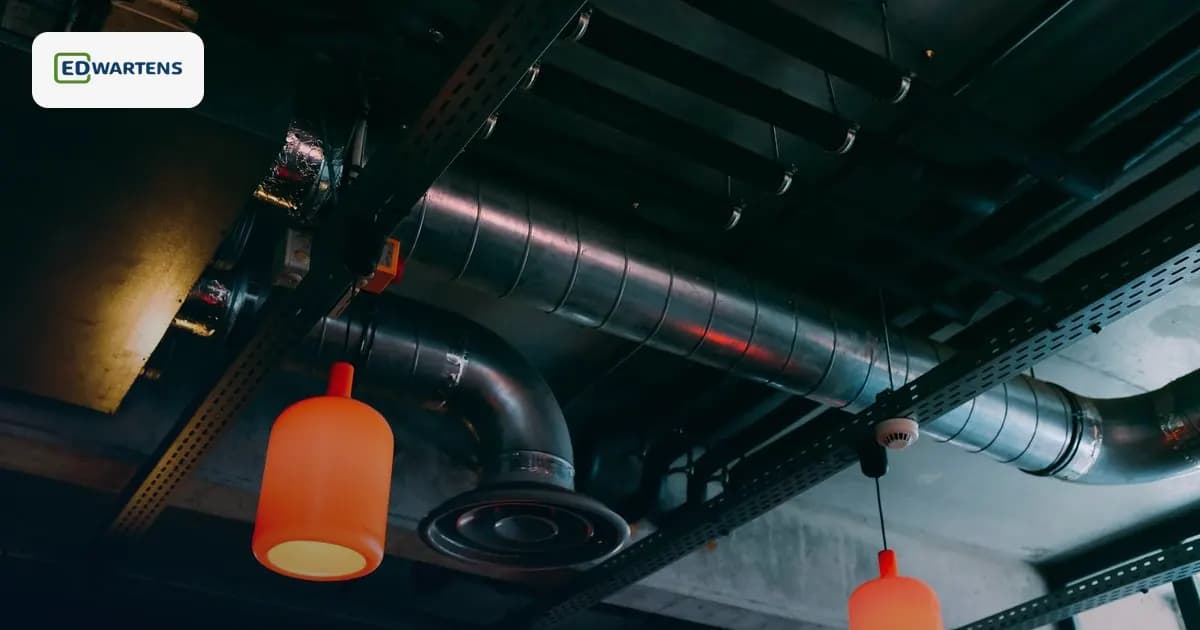
An MEP internship online should teach you how a building is served: cooled, drained, protected from fire and powered. It should also leave you with calculations and documents you can explain. Ours covers 8 learning weeks, the first 4 are the Free internship, and each week has a hand-in. This post gives the real week titles and what each one produces.
One fact about our own programme, so you can judge everything here fairly. The EDWartens internships are a training programme, not employment. The Free internship is 4 weeks, online and self-paced, with all four weeks open on day 1. It has lesson cards and a weekly check. You also work in the Virtual Workplace, a simulated plant or office with AI colleagues, and AI marks your hand-ins. There is no stipend, and we do not promise a job, an interview or a placement.
Week 1: What MEP is and how a building project runs
You learn the MEP trades, the stages of a building project and who does what. You also learn a rule that decides many arguments on site: why the drain gets the ceiling space first. Falls cannot be changed, but ducts and cable trays can be moved. The week ends with a short check.
Week 2: HVAC basics: loads, air and water
You trace the heat path of a cooled building and estimate a cooling load in kW and TR. You then turn the load into airflow, water flow and fresh air. The point is the chain from load to flow, because every later choice, from duct size to pump, depends on it. The hand-in is a short cooling load sheet. Standards bodies such as ASHRAE publish the reference methods used in practice.
Week 3: Plumbing and drainage basics
You name the plumbing systems and size a supply pipe from flow and velocity. You keep hot water safe from Legionella and set drain falls and a roof drain flow. The week is practical and numerical, with clear answers you can check.
Week 4: Fire fighting and sprinklers
You name the fire fighting water systems and sprinkler types and read a hazard class. You work out a design flow and tank volume, and say what a fire pump must deliver. This is the last week of the Free internship, after which you sit the final exam. Fire codes differ by country, and bodies such as NFPA publish widely used ones, so always check the code that applies where you work.
Weeks 5 to 8, if you extend
These weeks open when you extend the Free internship by 4 weeks (paid), or in the Engineer-verified edition, where an engineer also reviews your work.
- Week 5: Fire alarm and ELV systems. You describe how a fire alarm works, place detectors, size a standby battery, read a cause and effect matrix and name the main ELV systems.
- Week 6: Electrical services in buildings. You follow power from the utility to a socket, turn connected load into maximum demand and a transformer size, size a final circuit and explain standby power and lighting levels.
- Week 7: BIM and coordination (clash detection, ISO 19650 basics). You explain a federated model, the roles and documents of ISO 19650, the four states of a common data environment, and how clashes are found, reported and settled.
- Week 8: Testing, commissioning and handover of building services. You describe the commissioning levels, pass or fail typical pressure, balancing and electrical results, list the fire and life safety tests, and name what goes in a handover pack.
What do you hand in?
Each week a simulated colleague in the Virtual Workplace sends a brief for a made-up clinic building. You answer with a calculation sheet or a short document. In the free weeks, that is a services map for the clinic, a cooling load sheet for a meeting room, a plumbing and drainage sheet, and a sprinkler demand note for a basement car park. AI marks the hand-ins and says what to fix.
What can you show afterwards?
A verified record and a few pieces of work you can explain. The free certificate has your real dates and active hours and a QR code. The pieces are your own calculations. Describe them as training work, and be ready to say how you got each number, because that is what a hiring manager or lecturer will ask. Do not describe the internship as site experience.
How does the exam work?
The Free internship ends with a final exam of 15 multiple-choice questions. You have 60 minutes, you pass at 60%, and it opens full screen and is marked automatically. You get 3 tries; after that a fresh paper opens 24 hours later. When you pass, you can claim the free certificate. It shows your real start and finish dates and your active hours, and it carries a QR code so anyone can verify it. How the certificates work explains what each one shows.
If you want a person to look at your work, the paid Engineer-verified edition runs for 4 or 8 weeks. An engineer reviews what you hand in, and the documents are signed by Brijin Chacko. Details and prices, shown in your own currency, are on the Engineer-verified page.
Which free courses go deeper?
Our free courses on HVAC design: heat load, ducts and chilled water, plumbing and drainage design for buildings, fire fighting, sprinklers and fire pump design and BIM coordination, ISO 19650 and clash detection match the first weeks closely. ISO publishes the ISO 19650 series on managing information with BIM.
Where to go next
Read the full MEP internship page, see how the certificates work on the certificates page, or compare every track on the internships page. MEP sits in the Building, Quality & Projects group, one of four groups across 21 internships.
Last reviewed 9 Nov 2026.
Practise with us
Internship
MEP and Building Services
Free internship: 4 weeks, a free certificate and nothing to buy. The Engineer-verified internship adds an engineer's review and the graded certificate.
See the internshipRoles
Building automation
Roles that ask for this skill, 41 open in this country now. Free to see and to apply. We are not a recruitment agency.
See rolesTake the free course
 Free
Building automation · Beginner · Free
HVAC Design: Heat Load, Ducts and Chilled Water
 Free
Building automation · Beginner · Free
Plumbing and Drainage Design for Buildings
 Free
Building automation · Intermediate · Free
Fire Fighting Design: Sprinklers, Fire Pumps and Hydrants
 Free
CAD · Intermediate · Free
BIM Coordination with ISO 19650: Clash Detection and IFC
Questions
What does MEP stand for, and who is this internship for?
MEP means mechanical, electrical and plumbing, the services that make a building work. The internship suits mechanical, electrical and civil students and fresh graduates who want to understand how HVAC, plumbing, fire systems and power fit into one building project.
Do I need AutoCAD or Revit?
No. The lessons teach the thinking and the calculations, such as cooling load, pipe size and fire pump duty, and you do not need to buy software. Week 7 explains BIM and clash detection in concept, so you understand the models you will meet at work.
Which weeks are free?
Weeks 1 to 4 are the Free internship: what MEP is, HVAC basics, plumbing and drainage, and fire fighting and sprinklers. All four weeks open on day 1. Weeks 5 to 8 come with a paid extension of 4 more weeks, or with the Engineer-verified edition.
Is an online MEP internship the same as site experience?
No, and you should not describe it that way. It is a training programme, not employment. It builds understanding and a record of calculations and documents. Site experience comes from real projects, and there is no stipend or promise of a job.
What can I put on my CV?
List the internship as training, with the track name, the dates and active hours from your certificate, and the QR code link. Then name the specific pieces you produced, such as a cooling load estimate or a pipe sizing sheet, and be ready to explain each one.
Sources
- ASHRAE, heating, ventilation and air conditioning standards body (home page, read 9 November 2026)
- NFPA, fire and life safety codes and standards (home page, read 9 November 2026)
- ISO, ISO 19650 information management using BIM (home page, read 9 November 2026)
Written by the EDWartens engineering team for general education. Product names are trademarks of their owners; mentioning them does not imply endorsement. Prices and terms of other providers were checked on the date shown and can change.
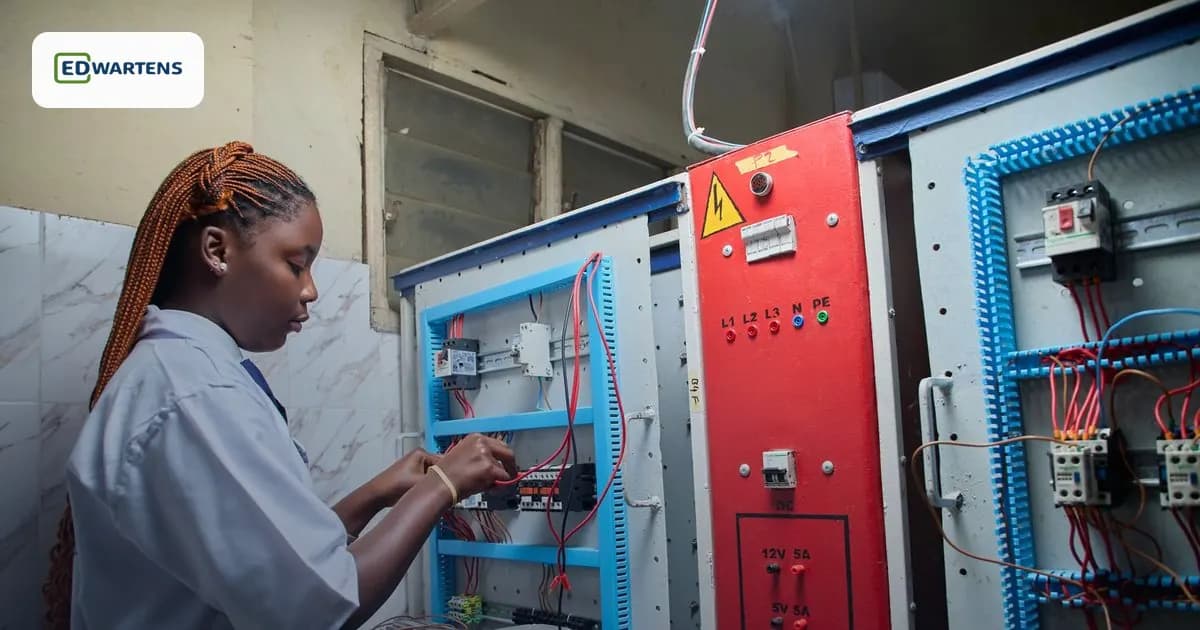
PLC internship: what you actually do, week by week
QA/QC internship for freshers: ITPs, SPC and NCRs in 8 weeks

Does a virtual internship count for college credit? (UGC, AICTE, HEC)

Are Virtual Internships Worth It? A 6-Point Test

Virtual Internship: Worth It? How to Make It Count

Free virtual internship with certificate for engineering students (2026)